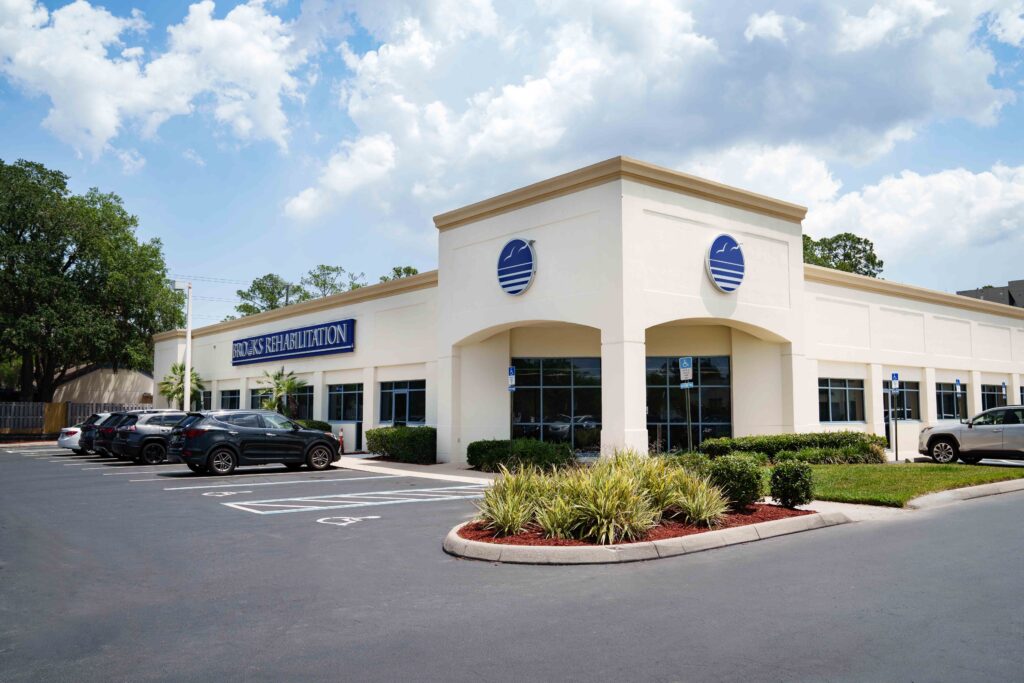
Low Vision Rehabilitation Services
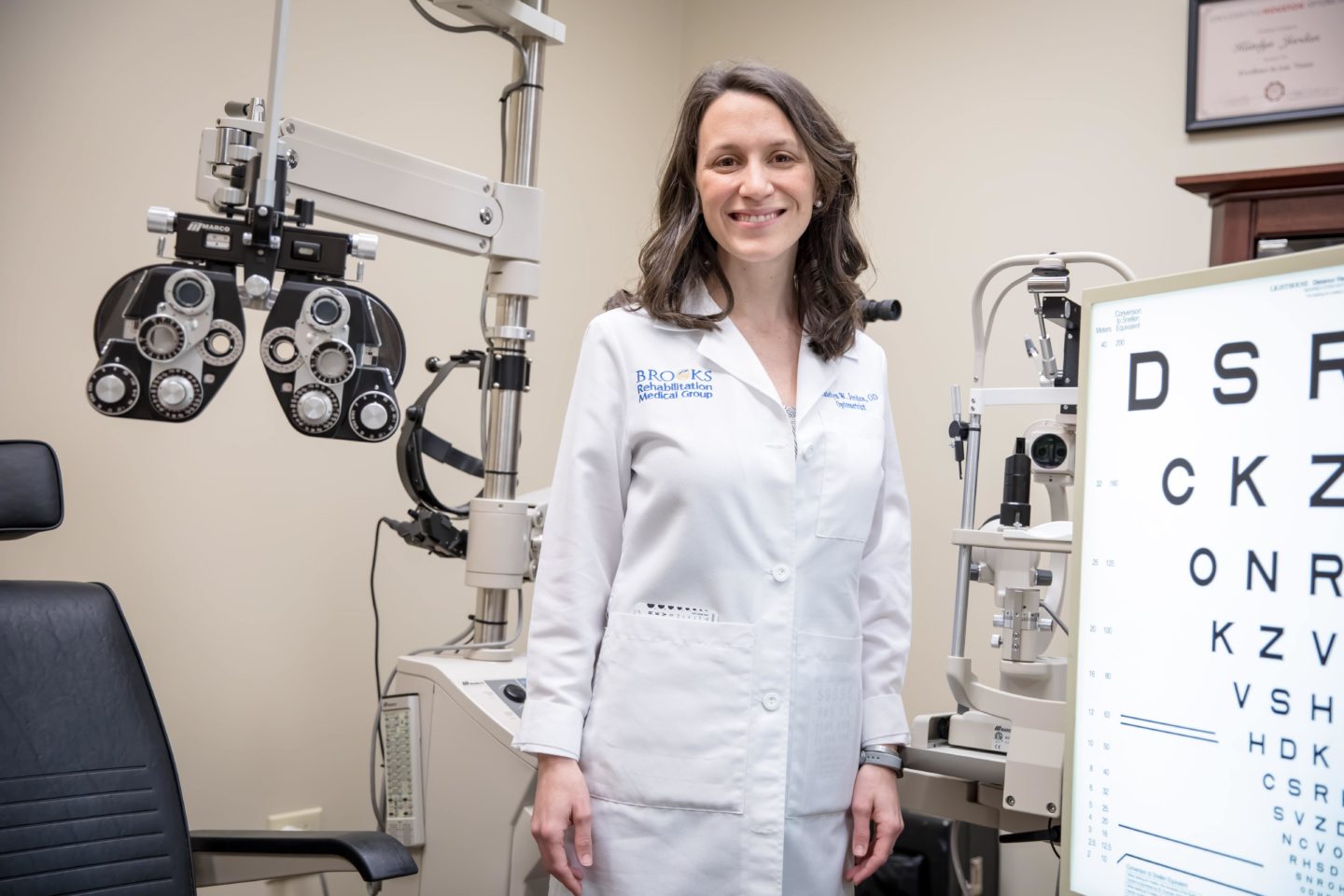
Brooks Rehabilitation provides one of the region’s most comprehensive programs for individuals experiencing vision changes related to neurological conditions, medical illness or eye disease. Our integrated approach combines optometry, rehabilitation therapy and advanced technologies to help patients maximize functional vision and maintain independence.
Who needs low vision therapy?
Low vision can affect people who have experienced a condition or illness such as a stroke or macular degeneration, cataracts, glaucoma or diabetes. When low vision occurs, it can’t be corrected by common interventions, however, rehabilitation can help individuals maximize their remaining vision and maintain independence.
How low vision rehabilitation helps
Low vision changes may affect a person’s ability to read, move safely, manage daily tasks, participate in meaningful activities or maintain independence. At Brooks, our expert optometrists provide evaluations and rehabilitation for individuals whose visual changes—regardless of diagnosis—are impacting participation in daily life.
Low vision therapy across multiple care settings
Brooks’ Low Vision Rehabilitation Program supports patients across outpatient therapy, inpatient rehabilitation, and home‑ and community‑based services. Our teams work together to improve use of functional vision and reduce safety risks to help improve participation in work, school, home and community life.
Vision conditions we treat
We treat any condition which limits the vision of a person and impacts their ability to participate in daily activities.
What to expect from a low vision evaluation
A low vision exam is different from a standard eye exam. Patients can expect the following care when participating in rehabilitation for low vision:

Exams focused on maximizing your current functional vision.

Goal setting through defining specific needs and test solutions to support your personal goals.

Creation of a personalized plan to help you use your remaining vision effectively.

Referrals to occupational therapists with advanced training in vision rehabilitation to assess daily activities, technology use and device integration.
Referrals to physical therapists who provide balance training, fall prevention and protective strategies to enhance safety and independence.
Additional low vision services provided
Brooks offers advanced services typically unavailable in traditional eye care settings. This includes special needs eye exams and eye examinations designed for patients who have difficulty communicating or participating in a standard eye exam.
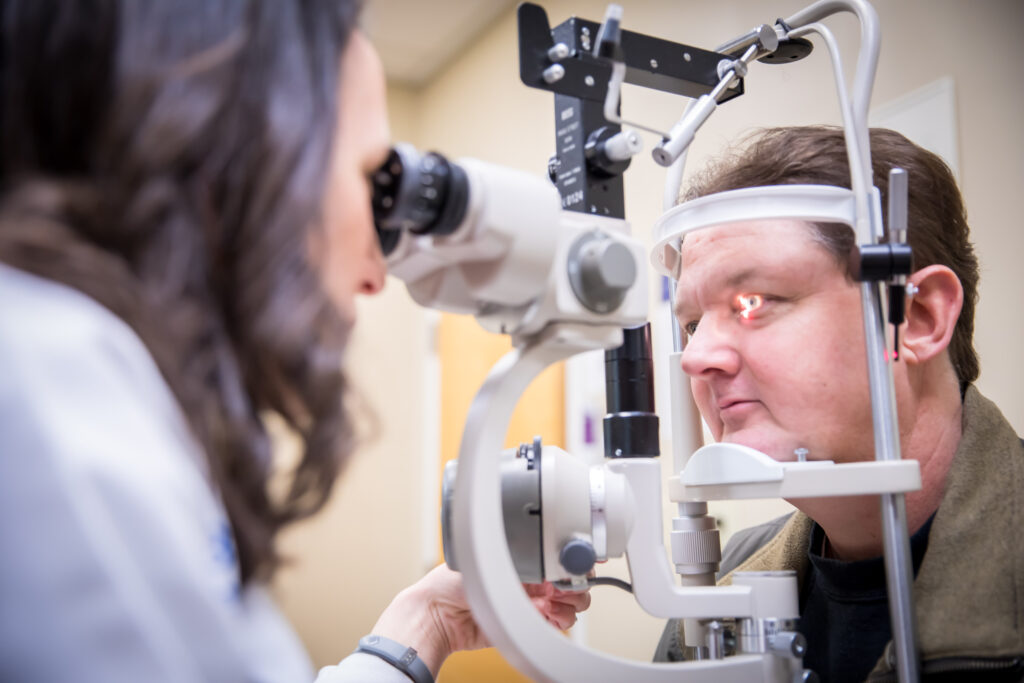
Special needs eye exams
These exams are for patients with difficulty communicating or participating in a regular eye exam.
Neuro‑visual evaluations
Eye exams to evaluate visual or ocular changes after neurological injuries (e.g., stroke, traumatic brain injury)
Technology and optical aids

Optical aids include:
- Magnifiers
- Microscopic glasses
- Telescopic glasses

Assistive tech includes:
- Talking devices
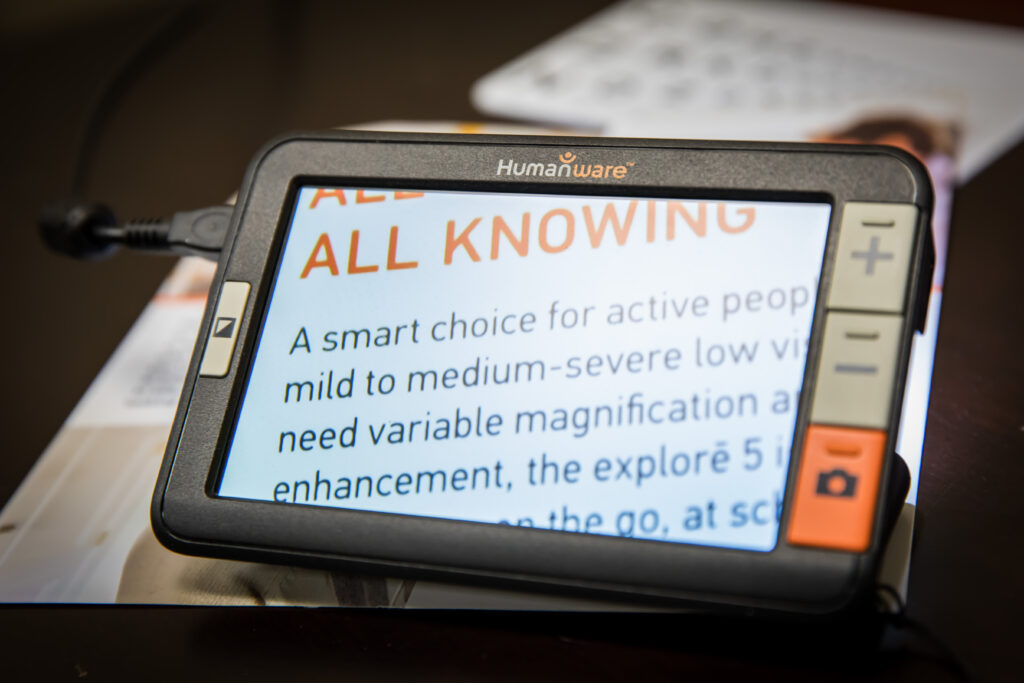
- Electronic magnifiers
- Lighting solutions
Lending library
Once individuals become a patient of our low vision program, they have access, through the Low Vision Center, to rent prescribed optical devices and technology—such as magnifiers, telescopes, and electronic CCTVs—on a monthly basis, with training provided by our therapists.
From patient to employee: discover Paige’s low vision rehabilitation journey
Paige discussions how her low vision experience helps support individuals who are interested in low vision therapy at Brooks and how work accommodations helps her support patients participating in the rehabilitation program.
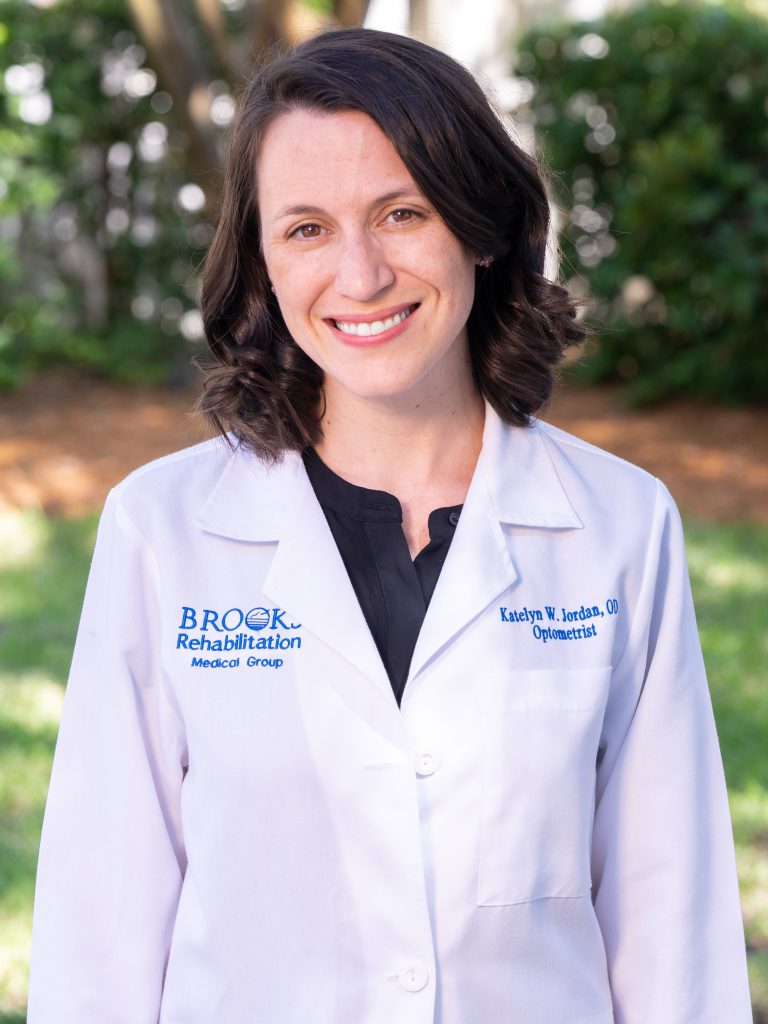
Our low vision rehabilitation program leaders


How to request care
The Center for Low Vision accepts referrals from physicians, therapists and other eye doctors, as well as internal referrals from Brooks’ system of care. Referrals are accepted by fax or email. Patients with referrals in hand can also request care by clicking the button below to fill out our form. Please contact our office with any questions.
P:(904) 345-7373
F: (904) 389-1060
E: [email protected]
To review the insurance providers Brooks contracts with, visit our insurance page. Our Low Vision Center also provides programs and grants to support care for those who qualify. Contact us directly to learn more.