Ryan’s Story: Living and Working With a Rare Disease
Back to Resource Hub
Rare Disease Day is February 28
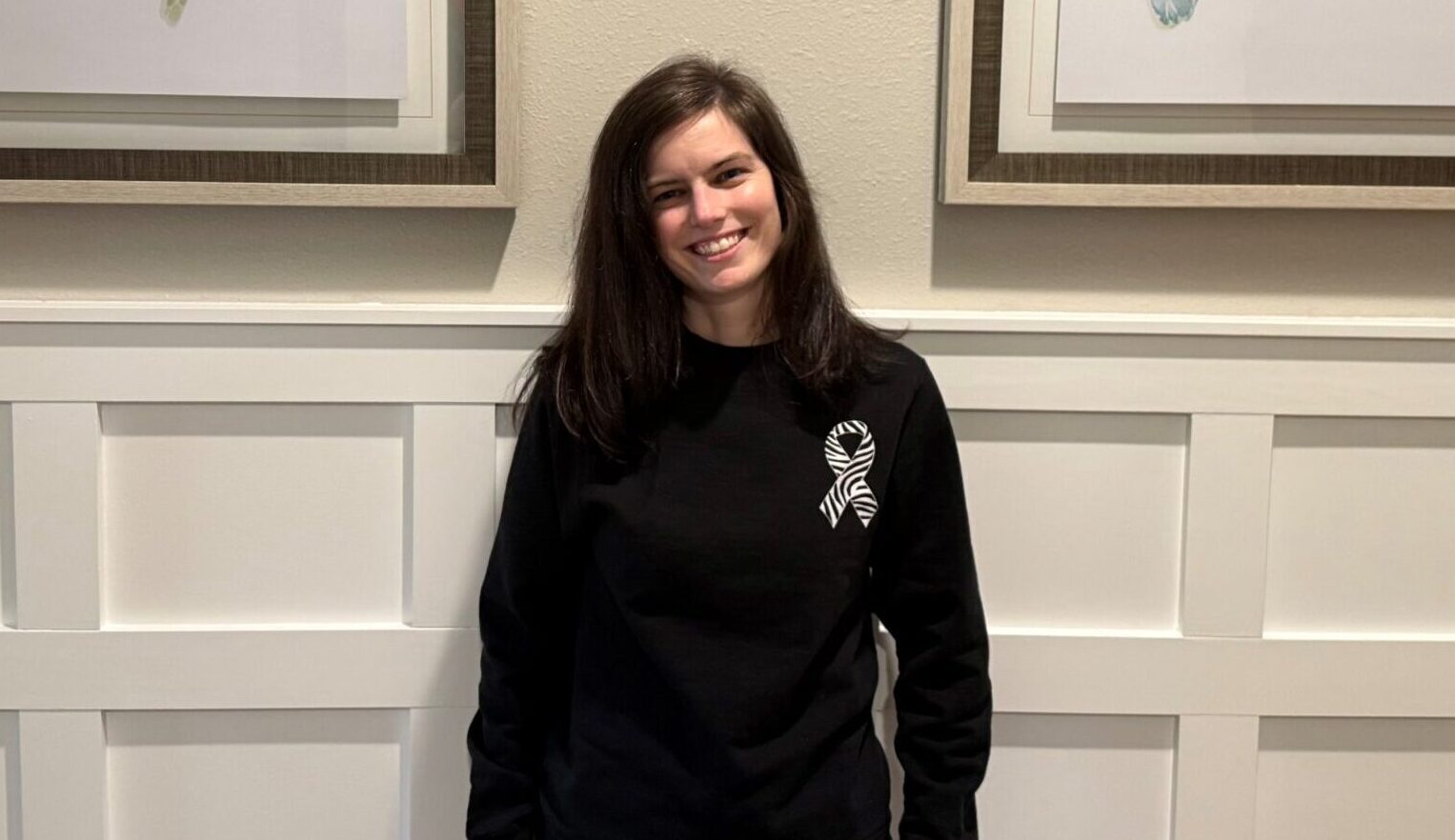
As a physical therapist, Ryan Conwell, PT, DPT, has spent her career helping other people regain movement, strength and confidence in their bodies. Since graduating from physical therapy school in 2013, she has built a profession centered on motion—lifting, guiding, supporting and encouraging patients through recovery. For years, her body was the tool she relied on most.
In August 2023, that changed. Ryan began experiencing symptoms she couldn’t explain, placing her among the 1 in 10 Americans living with a rare disease.
When symptoms don’t add up
Ryan says it started subtly, “I had strange back pain and spasms in my legs. It progressively got worse to include my back, then my core, abdomen and neck.” What followed was more than two years of appointments, referrals and tests. She moved from orthopedics to neurosurgery and eventually to neurology, searching for answers. As a clinician, she understood how the system worked. As a patient, she found it overwhelming.
At first, doctors suspected stiff person syndrome, a rare condition that had recently gained public attention. After extensive testing, Ryan was diagnosed with functional neurological disorder (FND), a condition where the brain’s structure appears normal but the signals between the brain and body are disrupted.
Every scan, MRI, CT and X ray came back clear. On paper, her body looked fine. In real life, it was not.
Ryan describes FND as a “software problem” rather than a hardware one. Her brain no longer sends or interprets certain movement signals correctly. Simple actions, like bending forward, became impossible, even without a visible injury.
The impact on her career
Being a physical therapist is a physically demanding job. There was a time when Ryan could no longer meet those demands. She left a previous position because her body could not keep up.
Finding support at Brooks Rehabilitation
Working with Anita L. Davis, PT, DPT, FNCP, at Brooks Rehabilitation changed her path. Davis says one of the biggest challenges is that clinicians are trained to look for the most common explanations first. “We are trained that when we hear hooves to think horses, not zebras,” she says “But sometimes with clinical reasoning we realize we really do have a zebra – a person with a rare disease. We have to be able to see the anomalies that may lead to the possibility of a different diagnosis”
Ryan’s treatment now focuses on retraining and rewiring the brain through neuroplasticity—relearning movements her body once performed automatically. She continues in physical therapy herself, working daily to regain function and independence. Everything she has experienced and learned has deepened her empathy for her patients and strengthened her advocacy on their behalf.
The emotional toll
Beyond the physical symptoms, the emotional weight of the journey left a lasting mark. Ryan, 37, is married and has a four-year-old child. She speaks openly about how often patients—especially women in their late 30s—are told their symptoms are anxiety, stress or exhaustion. She experienced firsthand how dismissive responses can delay care and deepen suffering.
Not being believed was one of the most painful parts of her journey.
A new perspective as a clinician
Ryan’s experience reshaped the way she practices. Ryan says she found an employer who supported her fully and helped her regain stability. “I’m able to do significantly more than I was.”
Today, she treats many patients with chronic pain and rare or complex conditions, including those who feel lost in the medical system. She understands the frustration of endless referrals, invasive testing and unanswered questions.
“I’ve been able to relate a lot better to patients now and help get them in the right direction and going to the right providers to get them the help they need, which has been really nice,” she says.
Why rare disease day matters
For Ryan, Rare Disease Day shines a light on stories like hers. While individual rare diseases may be uncommon, collectively they affect millions of people. Many patients see multiple doctors, cycle through misdiagnoses and exhaust their insurance coverage before finding answers.
Raising awareness is a step toward earlier recognition, better support and stronger policies.
Her message to others navigating a similar path is simple: Don’t give up. Keep advocating for yourself. If a provider dismisses your concerns, seek one who listens and believes you. Having people in your corner can make all the difference, helping you move from feeling stuck to finally moving forward.