Current Research Opportunities at Brooks
Are you a community member or patient interested in participating in a Brooks Research study? Review our current studies below to learn more and sign up to participate.
Stroke studies
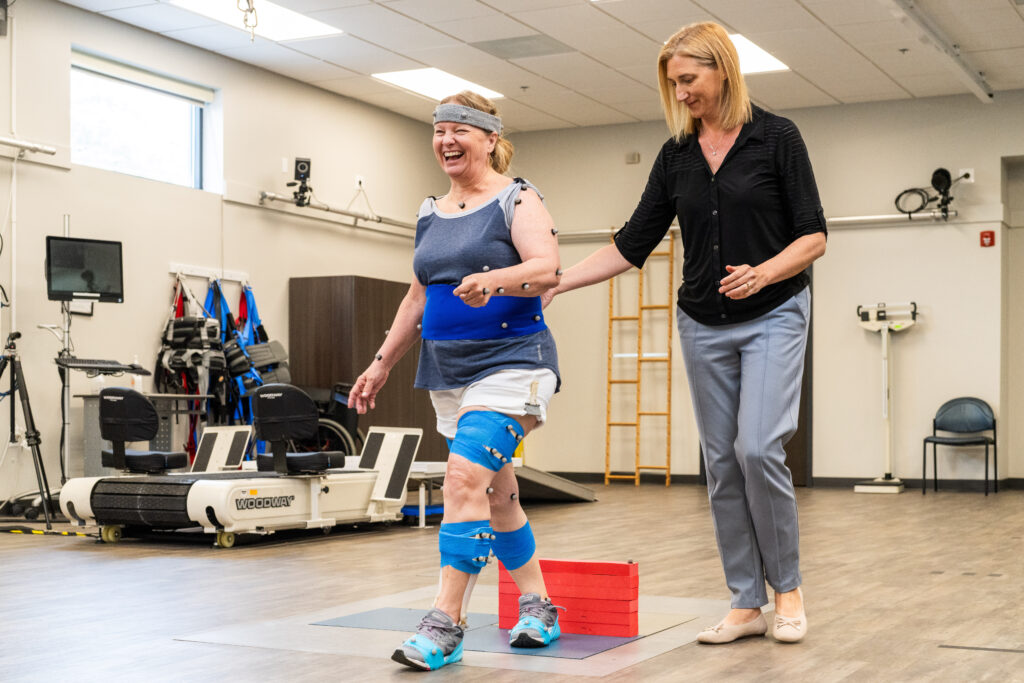
AFO Study (Mobility and Quality of Life after Stroke)
Brooks Rehabilitation is conducting a multi-site study in collaboration with University of Texas at Austin to improve mobility and quality of life for stroke survivors using ankle foot orthoses (AFOs).
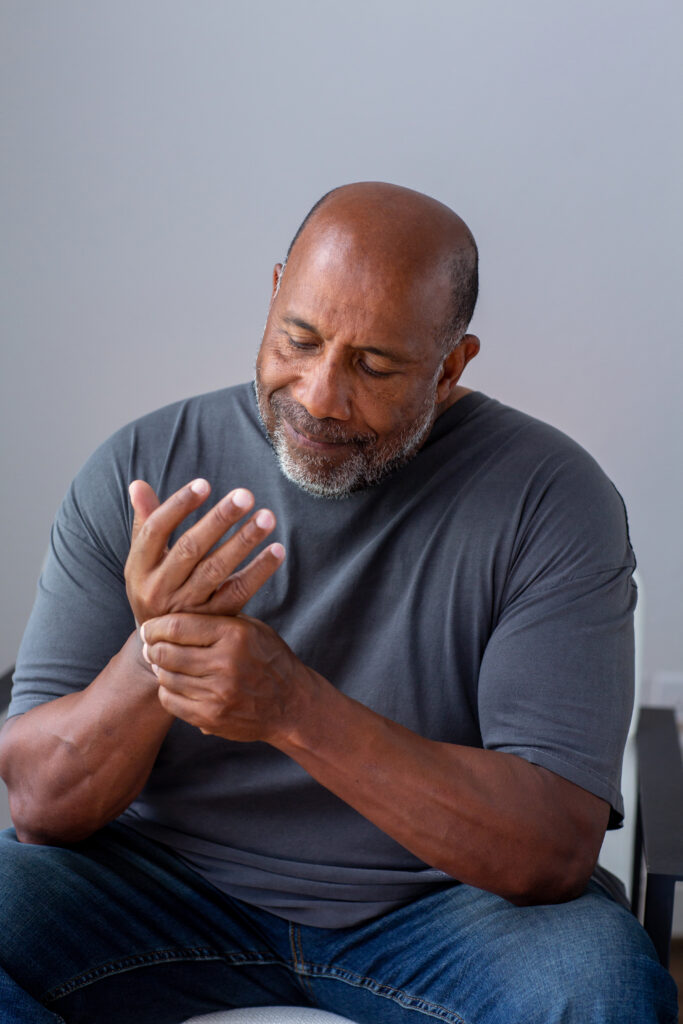
RESTORE Study (Arm Mobility after Stroke)
The RESTORE Stroke Study is testing a new way of treating arm weakness and limited movement after a stroke to see if it is safe and effective. The study will use Deep Brain Stimulation (DBS) to stimulate a brain region important for motor function, in combination with structured rehabilitation.
Spinal cord injury studies
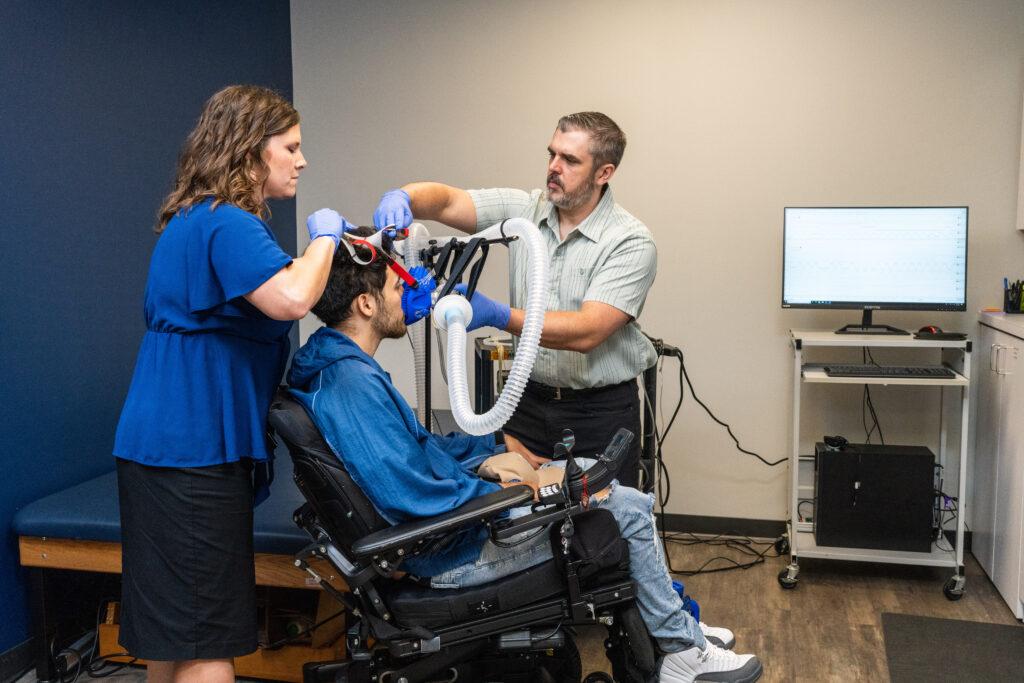
BioFLO Study (Biomarkers of Respiratory Recovery after Fluctuating Oxygen in SCI)
This study builds on earlier research and looks at whether doing special breathing exercises, along with short times of breathing low oxygen with added carbon dioxide, can help people with spinal cord injuries breathe better. Because a person’s genes can affect how well they respond to treatment, we are also studying how certain genes might be linked to changes in breathing after these treatments.
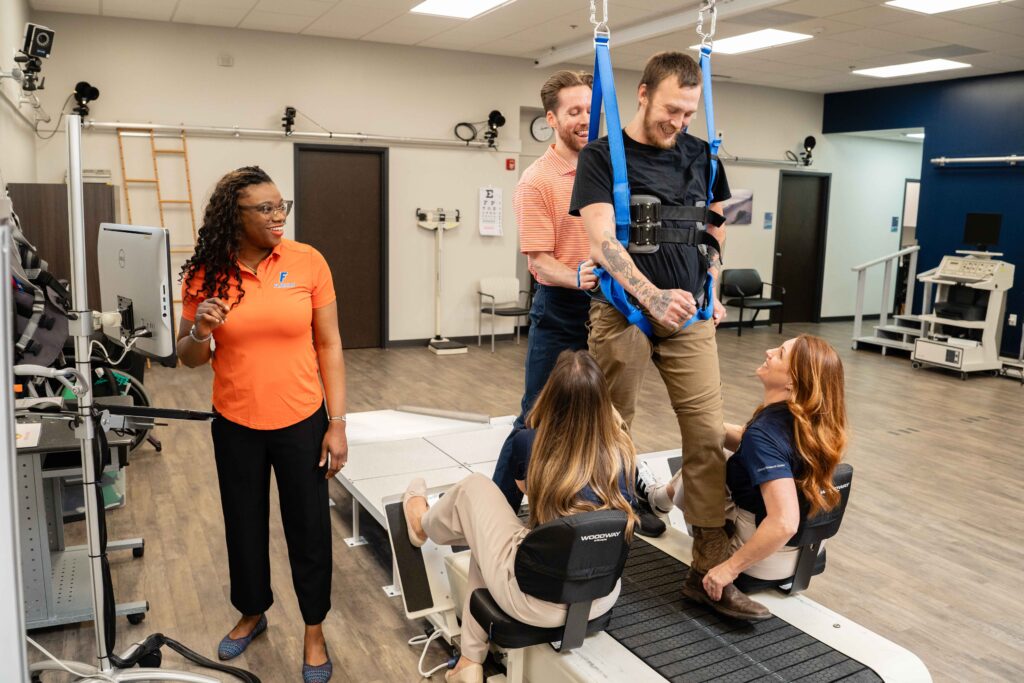
BO2ST-II Study (Breathing low oxygen to enhance spinal stimulation training and functional recovery for aging adults with chronic spinal cord injury)
The goal of the study is to determine the optimal dosage for different age groups of repeatedly breathing mild bouts of low oxygen for brief periods (termed acute intermittent hypoxia (AIH)) combined with transcutaneous spinal cord stimulation (tSTIM) to improve recovery of walking and strength after spinal cord injury.
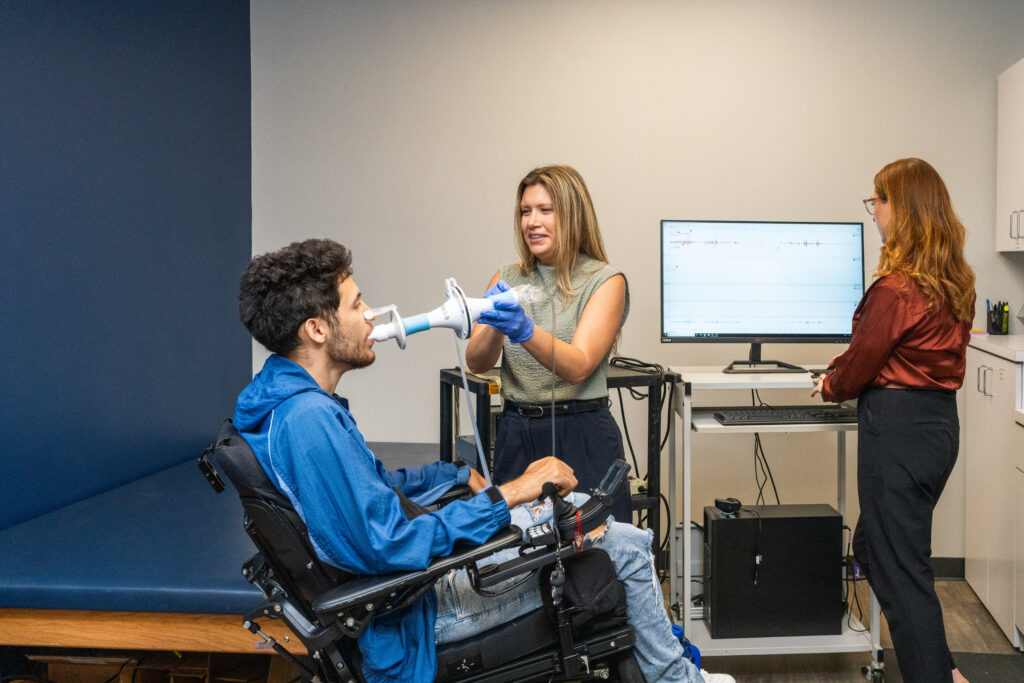
HyPER-FLO Study (Hypoxia Pathways for Early Recovery after SCI)
Spinal cord injuries can weaken breathing and coughing, which can lead to serious health problems. The goal of this pilot study is to compare two types of acute intermittent hypoxia (AIH) treatments in people who recently had a spinal cord injury. Each AIH treatment works through a different pathway in the nervous system, so the study will help us understand which one may lead to better breathing function. We are also studying how a person’s genes might affect how well they respond to treatment.
Additional studies

UP2 (Walking and Cognition)
This study will involve 18 sessions of intense walking exercise combined with mild, non-invasive brain stimulation in older adults who may or may not have noticed changes in their cognition. This study is examining the effects of combining both interventions on cognitive and walking function.

Join our active research registry
Not a fit for a current study? Register for future study alerts and our research team will reach out when they are conducting a study that meets your needs.
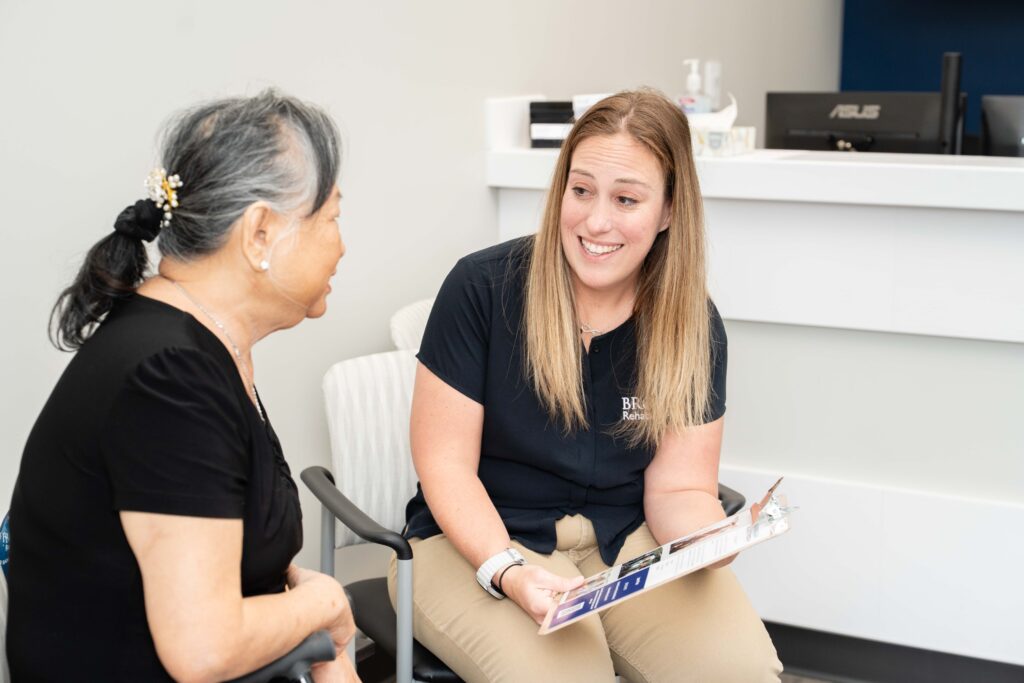
Help spread the word
Know someone in the community who would benefit from a Brooks Research study? Download our flyer below to share with them!
Contact us
Have questions or want to learn more? Reach out to our team at (904) 345-7168 or [email protected]
Research News and Updates
Recent research and clinical insights from Brooks Rehabilitation
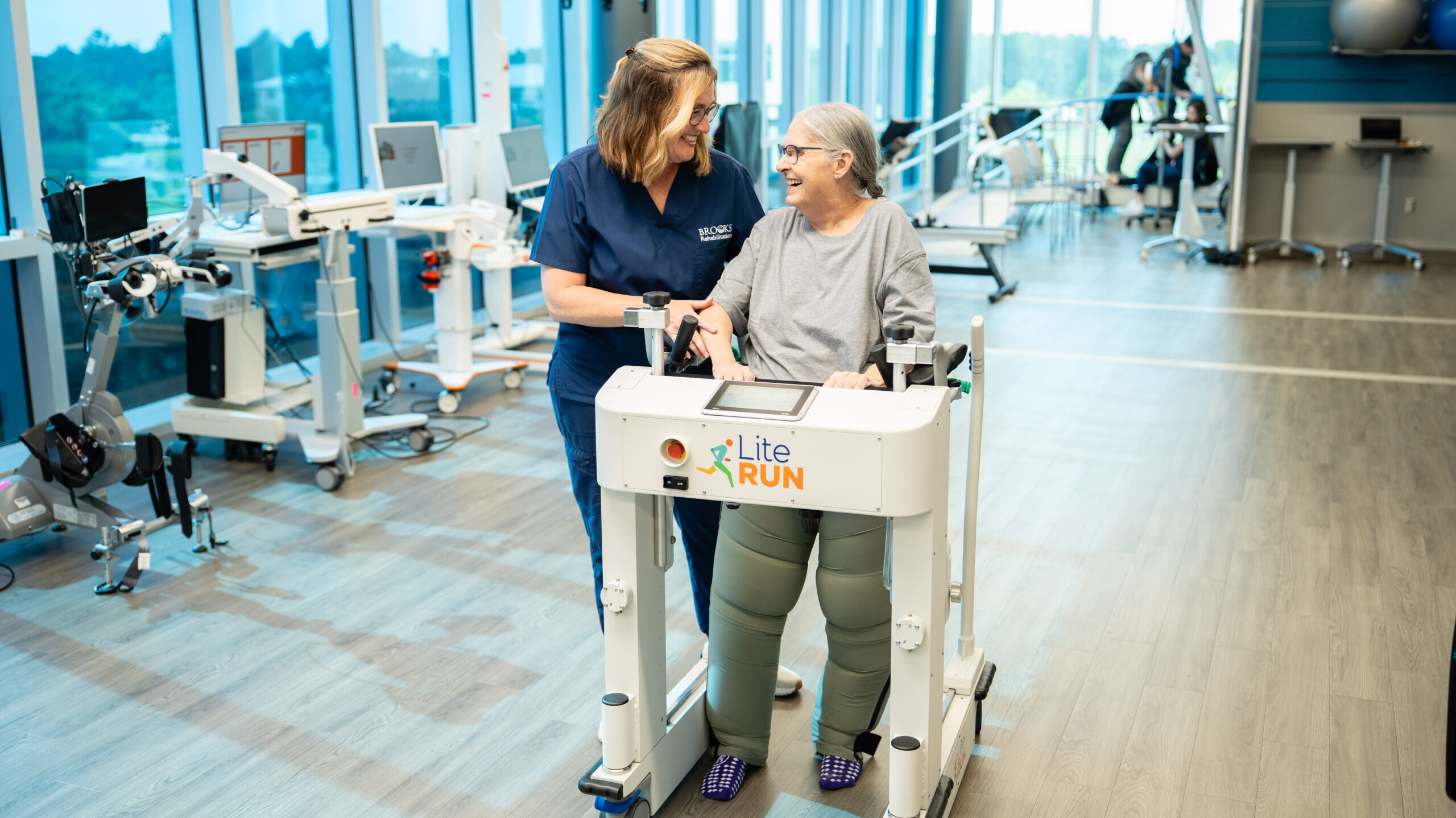
Brooks Rehabilitation Adds Lite Run Inc. Technology to Improve Patient Mobility
Brooks Rehabilitation, a top-ranked physical rehabilitation provider, announced the addition of FDA-registered anti-gravity mobilization technology, Lite Run, Inc. Brooks is the...