From Walker to Wading: David’s Journey Back to Montana’s Rivers
Back to Resource Hub
When David Behringer walked through the doors at Brooks Rehabilitation’s Winter Garden outpatient clinic, he could barely move without his walker. He had just undergone bilateral knee replacement surgery and faced a daunting recovery ahead. However, David had a goal that kept him motivated: he wanted to return to the rivers of Montana and Yellowstone, where he’d spent years fly fishing in remote, challenging terrain.
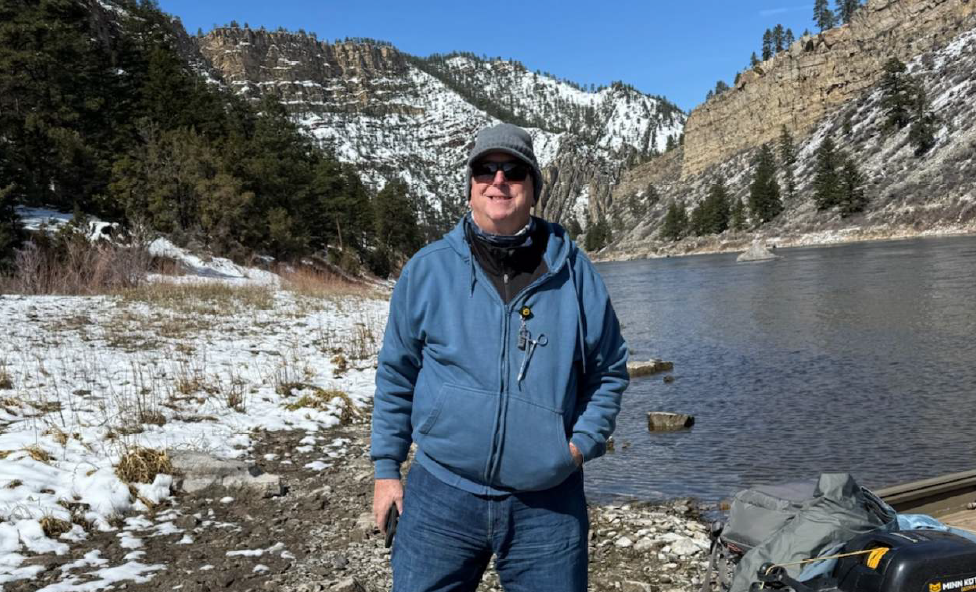
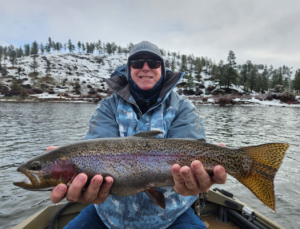
Today, David walks five to nine miles daily, navigates steep embankments with ease, and has successfully returned to the passion that drives him: standing in thigh-high spring water at Cave Falls in Southwest Yellowstone, casting his line in some of the most remote fishing spots in the country.
Finding the right rehabilitation partner
David’s journey to Brooks didn’t begin smoothly. After his surgery, he initially signed up with another facility that left him feeling like just another number. “One person was dealing with five people at a time,” David recalls. “I never got the attention I needed, and when I had complications from my knee surgery, they didn’t seem to want to address them.”
Frustrated but determined, David and his wife visited other facilities before discovering Brooks Rehabilitation. The difference was immediately apparent.
“When we came here, they only had three or four people in the room at a time and two to three therapists working with them,” David explains. “It seemed like you were actually going to get some personal attention. After sitting down with them and hearing about how they were going to create a personalized plan for me, I knew this was different.”
A personalized approach to recovery
What set Brooks apart wasn’t just the lower patient-to-therapist ratio, it was an individualized care plan developed specifically for David’s needs and goals. His physical therapist, Jordan Ball, PT, DPT, quickly recognized David’s determination and adjusted his approach accordingly.
“David had a passion and desire to work that I haven’t seen in my 15 years as a therapist. I knew immediately that his motivation would help us achieve more together. I also knew I’d need to use my ‘spidey senses’ to prevent him from overdoing it and inadvertently causing setbacks.”
David’s treatment plan wasn’t one-size-fits-all. Jordan and his team understood that David wasn’t just trying to walk to his mailbox. He needed to work toward being able to navigate rocky river embankments, wade through fast-moving water and spend hours on his feet in remote wilderness areas.
“We pushed for insurance extensions because David needed more than basic mobility,” Jordan explains. “He had to manage construction job sites and navigate Montana’s challenging terrain in all kinds of weather. When a patient wants to do more, we go above and beyond traditional rehabilitation goals.”
Remarkable progress through partnership
Within just two weeks of starting at Brooks, David had graduated from his walker to a cane. Two weeks after that, the cane was gone entirely. At home, his walking progressed from 500 steps to two miles in a matter of weeks.
“Jordan told me to be patient. He would say “it’s a marathon, not a sprint,” David says. “I got anxious wanting to get better quicker, and there was one time I pushed myself too hard and set one knee back a couple of weeks. But they worked through it with me.”
The comprehensive approach included in-clinic sessions three days a week, along with a detailed at-home exercise program that David could follow during his off days. Jordan could tell when David wasn’t keeping up with his home exercises and would encourage him to stay consistent.
“He’d say, ‘You’ve fallen back here. I can tell you’re not working at home,'” David recalls. “It was only 30 minutes a day, but it made all the difference.”
Overcoming unexpected setbacks
David’s recovery journey included challenges beyond the knee surgery itself. After spending more than a month in the hospital due to blood clots that caused him to flatline, doctors considered putting him under anesthesia to manually stretch his knees and break up scar tissue. Instead, they recommended he try rehabilitation first.
“Coming to Brooks, we were able to work that out pretty quickly,” David says. “When I went to see the surgeon a month later, he said I didn’t need the surgery. He was very surprised at how I came along after my setback.”
Later, David faced another obstacle when he was diagnosed with colon cancer. Within 13 days of the diagnosis, he had surgery and was unable to do any rehabilitation for three weeks. Once again, he returned to Brooks, working through January to regain his strength.
By March, David was back on the rivers, fishing in a snowstorm with 40-mile-per-hour winds and loving every moment of it.
Returning to what matters most
The moment that crystallized David’s success came when he finally returned to his fishing guide in Montana who he’d been working with for six years.
“Right away, he said, ‘I’ve never seen you move like this.'” David recalls with pride. “I was able to get in and out of the boat, wade through thigh-high water running pretty fast and get a solid foothold.”
One of David’s most cherished memories is from the remote southwest corner of Yellowstone, accessed through Idaho. “The Fall River has a 40-foot waterfall that’s probably 300 feet long,” he describes. “I was able to walk out into the middle of that spring water and fish, which I hadn’t been able to do for several years.”
He’s also conquered the Land of the Giants, a legendary stretch of the Missouri River known for producing rainbow trout measuring 18 to 27 inches (far larger than the typical 10 to 15-inch fish most anglers encounter).
“We catch about 35 fish each per day,” David explains. “It’s this one stretch of the river that produces fish that big, and now I can navigate it without any limitations.”
Individual care, exceptional results
For Jordan, David’s success represents exactly why he became a physical therapist. “When he sent me pictures of him fishing at Kane Falls, I thought, ‘Man, we really made it,'” Jordan reflects. “This is exactly why we do what we do, to see people get back to the things they love.”
What made David’s recovery possible wasn’t just clinical expertise. “At those other high-volume clinics, the therapists are probably just as educated as we are,” Jordan notes. “However, they don’t have the resources, time, or availability to really get to know people because they’re dealing with five or six patients at a time. At Brooks, we’re able to tap into our patients motivations and use our skills to help them achieve their goals.”
David agrees, and says, “At Brooks, they take the time to understand who you are and what you want and then make a plan that works for you. I could see it every time I came in. They treated each person as an individual. How Jordan talked to me was different from how he talked to others in the room, because everyone has different needs and motivations.”
Looking ahead
Today, at 66 years old and after 50 years in the construction industry, David is more active than he’s been in years. He walks five to nine miles regularly, has lost 40 pounds and is even incorporating running into his routine. Currently he is managing 100 steps at a time, building up to a full run.
His goals continue to expand. This year, he plans to hike the 10-mile round trip to the Subway in Zion National Park and attempt three challenging walks in five days. These adventures would have been impossible before his rehabilitation at Brooks.
When asked about David’s remarkable recovery, Jordan smiled. “If there’s anyone who can beat the odds, it’s David. But he had a great team at home, too. His wife was a huge part of this journey, and I’m just grateful we got to be part of that team.”