Turning the Light Switch Back On: Dean’s Recovery from Stroke and Aphasia
Back to Resource Hub
Imagine being a healthy, 39-year-old getting ready to start your work day. You feel an unusual pain in your chest and suddenly collapse. When you gain consciousness, you try to call a friend but you’re unable to speak. On June 7, 2024, this was Dean Ojo’s reality.
A surprising diagnosis
Dean remembers reaching up for his phone on the counter. “I called my friend David. I couldn’t speak at all, but he could hear me breathing. He knew something was wrong and rushed over.” Dean then realized he couldn’t lift his right arm to unlock the door. Rescue workers used a ladder truck to enter his third-floor apartment though the balcony door, which was unlocked.
At the hospital, Dean learned he had a stroke. “They told me I had a hole in my heart and a tiny clot got into my bloodstream to my brain and caused it. My whole life I didn’t know about the hole.”
A lingering effect – aphasia
Dean was living in Atlanta, Georgia, and working from home as a systems engineer for Nordstrom when he had the stroke. He spent several months in the hospital and then continued to both inpatient and outpatient rehabilitation to regain movement on his right side. However, a year later he was still struggling with aphasia.
Aphasia is an acquired communication disorder that impairs a person’s ability to speak, write and understand others, but does not affect intelligence. More than two and a half million individuals across the United States are living with aphasia.
Finding help in Jacksonville
Dean’s sister, Shay, was a constant source of support during his recovery. She knew Dean was frustrated being unable to talk, work at the job he loved or be totally independent. She searched for resources in the Atlanta area to help with his aphasia but wasn’t finding the care he needed. At the same time, Dean’s grandmother who lived in Jacksonville, Florida, heard about the Brooks Rehabilitation Aphasia Center (BRAC).
“Dean’s grandmother and his sister both called me on separate occasions to ask about the Aphasia Center and what we offer. Then his sister came in to tour and meet with me,” said Jodi Morgan, CCC-SLP, director of aphasia programs at Brooks Rehabilitation. “Once they felt comfortable that we had services to help, Dean moved from Atlanta to Jacksonville to come to the Aphasia Center and receive outpatient therapies at our Northside clinic.”
“When I first started, I didn’t say much to Jodi at all. I didn’t like coming to Florida. I was angry because of my heart. I was angry that I had a stroke, and that I couldn’t talk,” said Dean. “But Jodi was a lifesaver. I didn’t want to talk to her, but she talked to me. She convinced me I could get better.”
The BRAC offers both a six-week Intensive Comprehensive Aphasia Program (ICAP) and a community program where members participate in interactive coordinated groups in a supportive environment. While Shay initially wanted Dean to participate in ICAP, Jodi had a feeling Dean was going to flourish in the community program and recommended trying that first. Her instincts were correct and Dean started making rapid improvements.
“Reading and writing and comprehension were tough for him at first. That improved pretty rapidly. Dean was very self-motivated. He always pushed himself out of his comfort zone,” said Jodi.
As Dean improved, BRAC staff started asking him to help with presentations and lead discussions. When new members joined, he would show them around the Center and mentor them. He became an “aphasia ambassador.”
A return to work
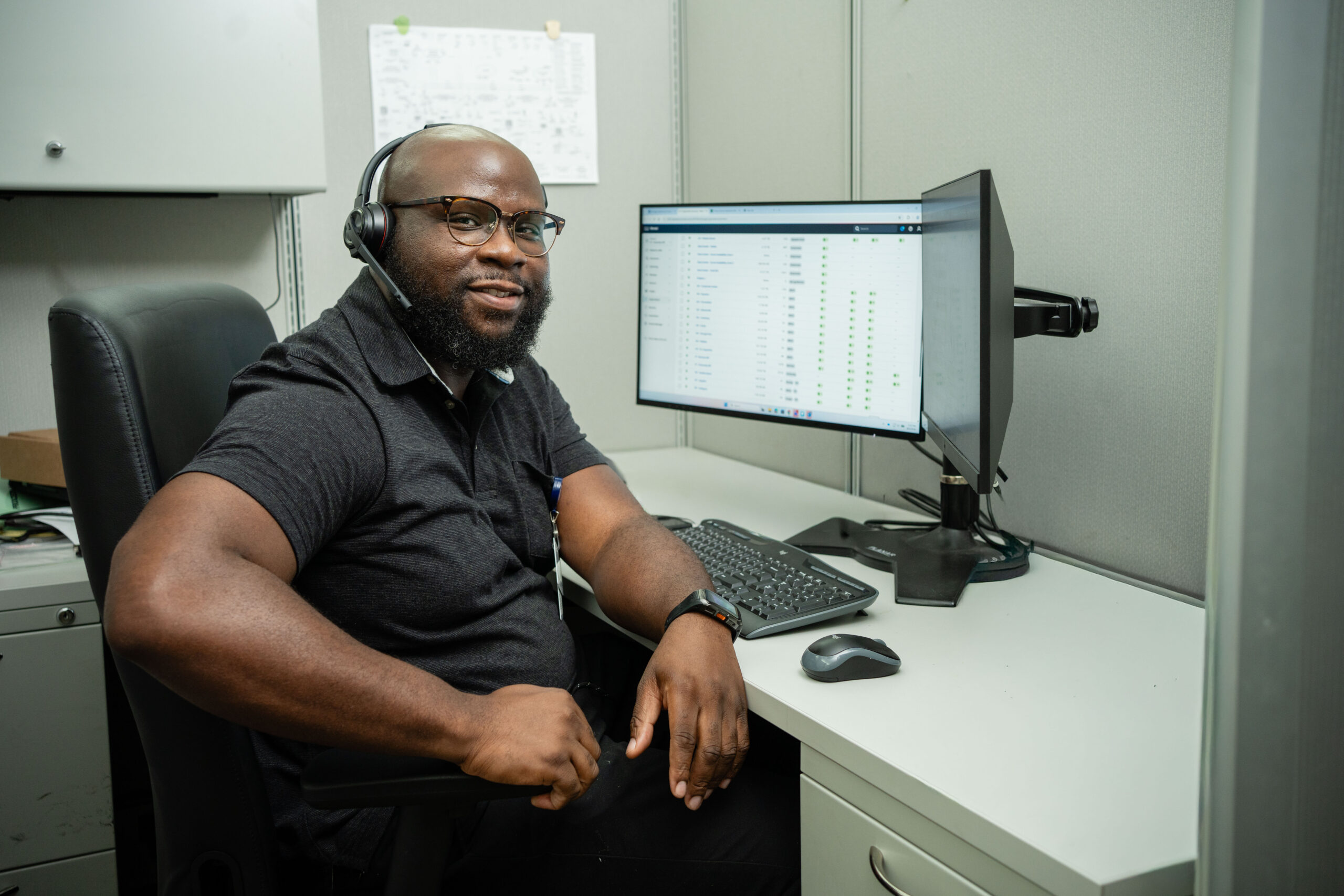
Dean’s most important goal was returning to work. The BRAC team worked in coordination with vocational rehab expert, Shanon Braden, at the Brooks Brain Injury Clubhouse to create a plan. They practiced IT skills and interview questions with Dean for weeks. When a position opened in the Brooks IT department, they reached out to Josh Bauman, MBA, CHCIO, PMP, Chief Information Officer.
Dean interviewed for the role with the IT service desk and got the job!
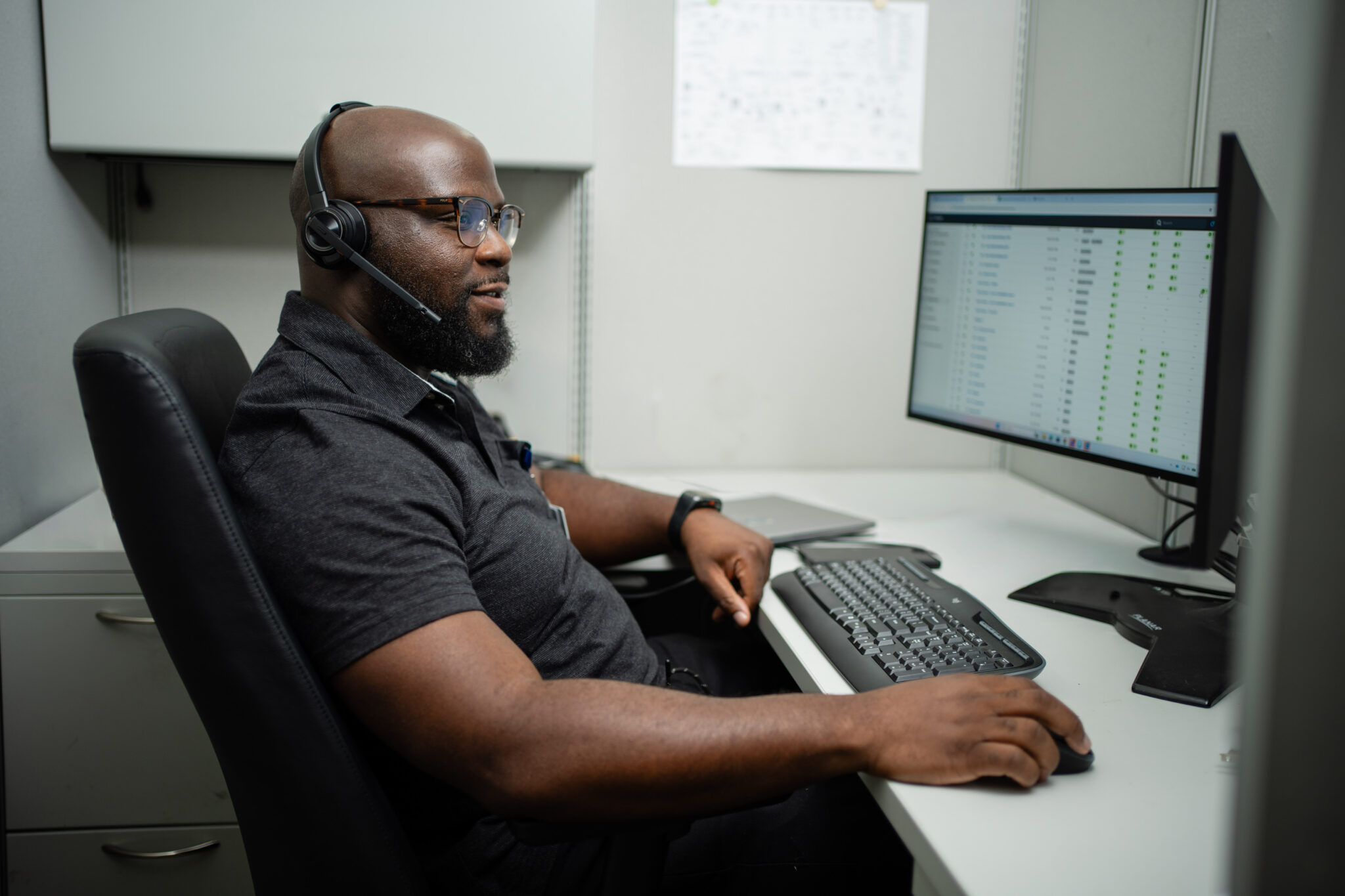
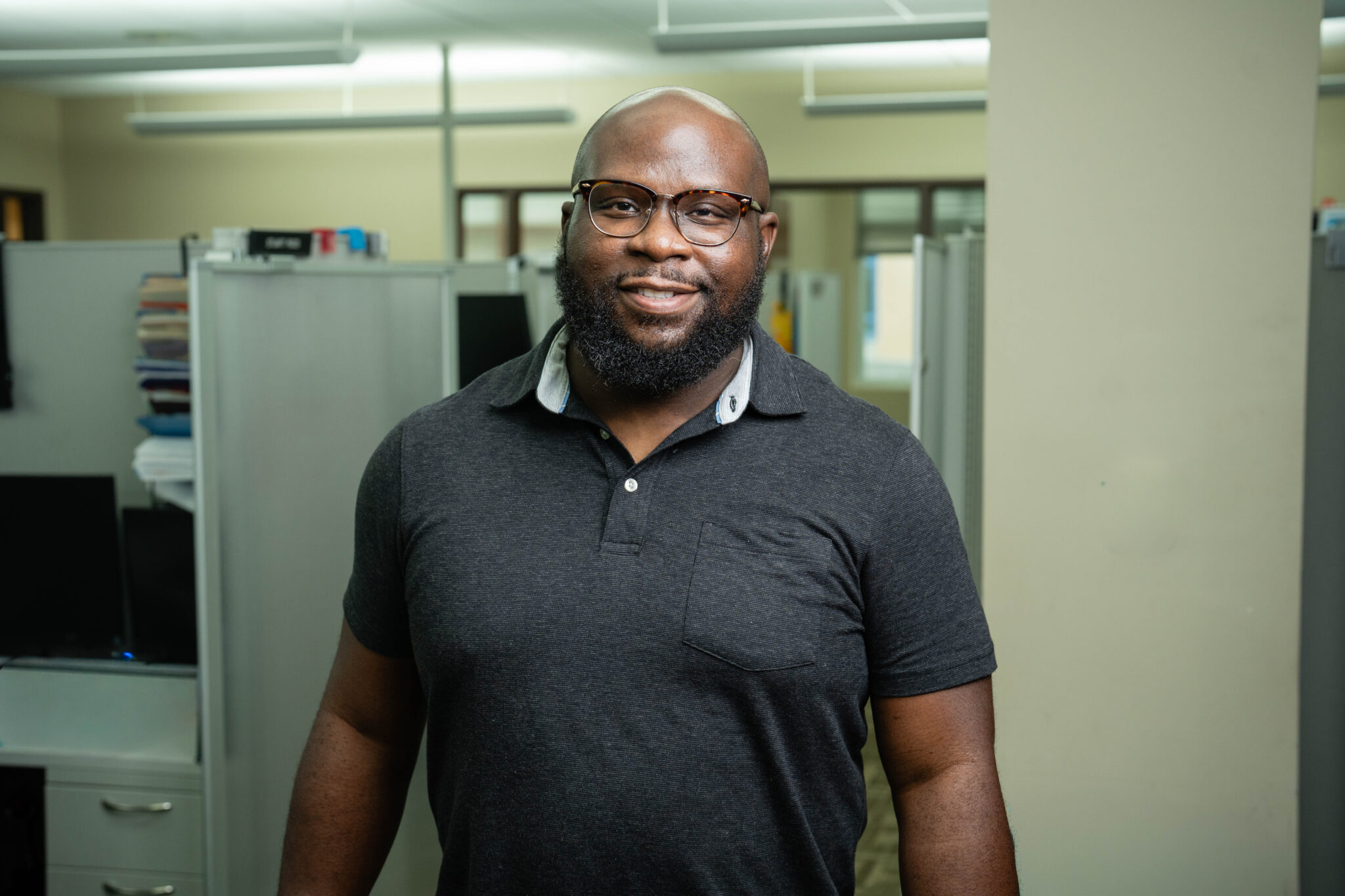
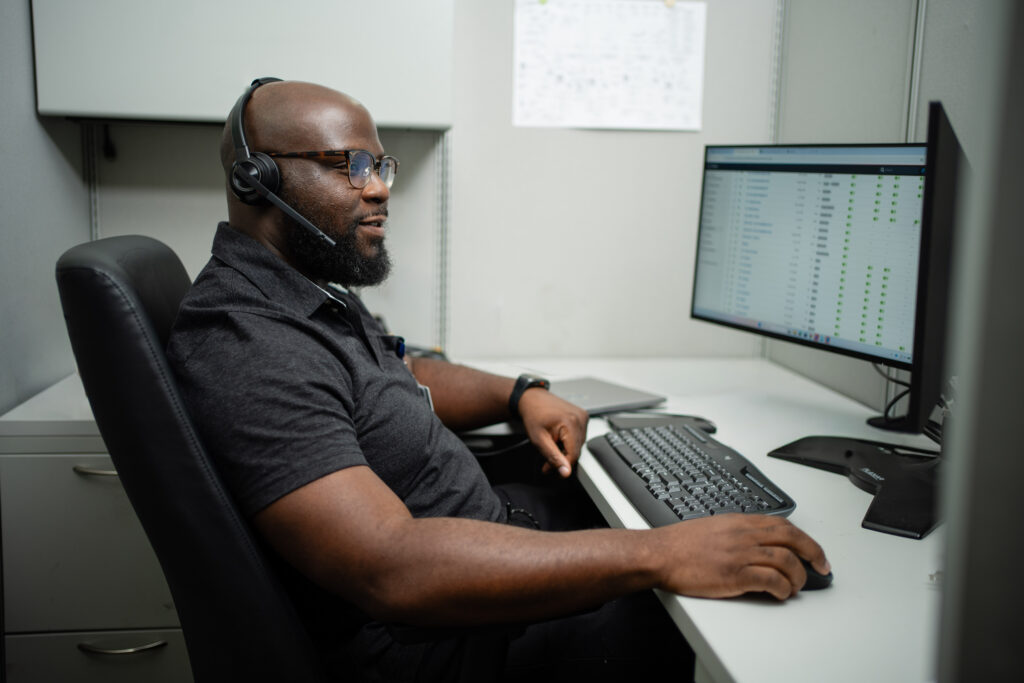
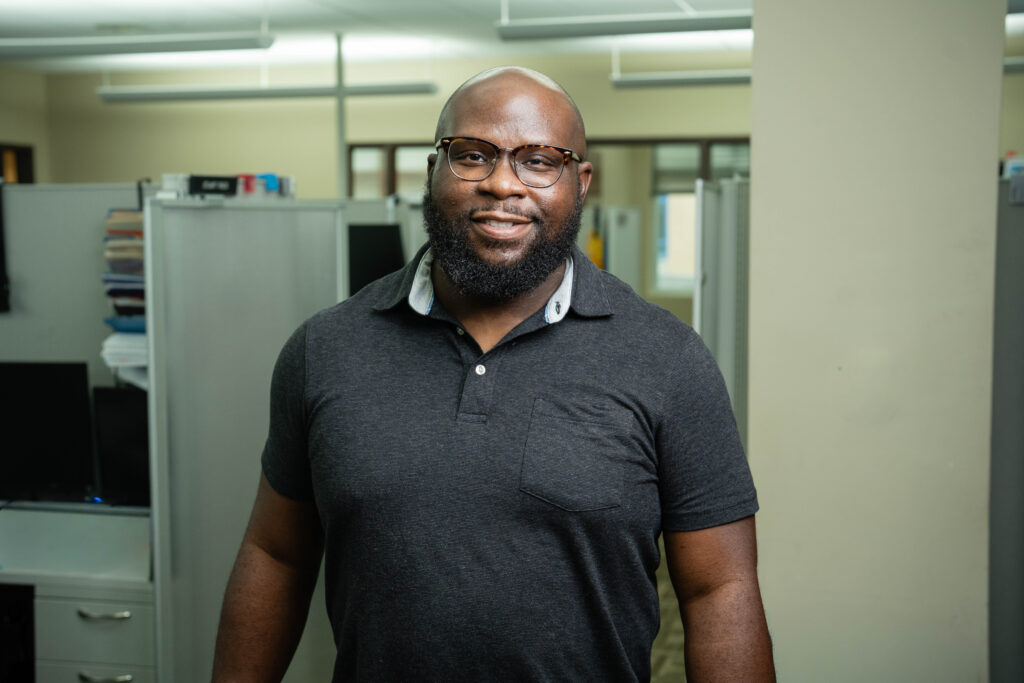
“Dean has been an incredible addition to our team. His transition into IT has been supported by a thoughtful, collaborative process focused on creating an environment where he can learn, contribute and succeed. Our team embraced the opportunity to support his growth, and he has risen to the occasion,” said Josh.
Jodi attributes his young age and his strong willpower for his success. “Dean made amazing progress and worked so hard. He has trouble remembering specific words sometimes but just keeps conversations more generic.”
Despite his aphasia and a bit of continued weakness on his right side, Dean has been working in his new role since February 2026, and says it has been “amazing!” “He brings a positive attitude, a strong work ethic and a genuine care for others that is felt by everyone around him. His smile and his caring demeanor truly reflect the kind of service and culture we strive to deliver at Brooks every day. We are grateful to have him on the team and excited to see his continued growth,” said Josh.
Moving the dimmer switch
Dean describes stroke recovery like a light switch. “You cut the light off and it’s dark. It happens quick and you can’t flip the switch back on. It’s like a dimmer and you move it up a little bit at a time. You work hard and do the best you can, but for some people, the switch doesn’t go all the way back up. And you have to adjust.”
While Dean is enjoying being back to work, he hopes to continue his recovery and get back to a role as a systems engineer or in cyber security. One day, he hopes that Brooks will offer services like the BRAC in Atlanta. “There are a whole lot of people like myself suffering with strokes, and they need Brooks too.”