Liver Transplant Rehabilitation

At Brooks Rehabilitation, we help you get stronger, heal from your surgery and safely return to daily activities after a liver transplant.

a physician performs a strength assessment on a woman patient in a hospital gown by having her push on his hand.
Medical Reviewer: Pierre Galea, MD
Last Updated: March 24, 2026

What is a liver transplant?

A liver transplant replaces a failing liver when it can no longer perform essential functions. While the transplant itself can be lifesaving, recovery from surgery can be challenging. People often experience physical weakness, muscle loss and have to heal from a large abdominal incision.

We address these challenges while helping you regain strength, mobility and confidence after surgery and hospitalization.

Supporting recovery after liver transplant

Recovery after a liver transplant involves careful healing and gradual rebuilding. At Brooks, we support your body as it heals from surgery while also helping you regain strength and energy. Liver transplant rehabilitation at Brooks focuses on safe healing and a steady return to function.

Our approach includes:

  • Maintaining fluid balance and healing: Ongoing observation helps support safe recovery and timely response to changes.
  • Managing medication effects: Care teams monitor and support changes related to transplant medications. We keep a close eye on your blood sugar levels, which can be disrupted as the new liver heals.
  • Rebuilding strength after illness or hospitalization: Therapy addresses the muscle loss and weakness that can occur after prolonged illness.
  • Protecting surgical healing: We support safe healing from the surgery while guiding your movement and daily activity.
  • Restoring energy and activity tolerance: Rehabilitation progresses gradually to help manage fatigue and improve your endurance.

Why choose Brooks Rehabilitation for liver transplant rehabilitation?

At Brooks, our liver transplant rehabilitation experts support complex recovery while helping you safely regain strength and independence.

Highlights of our program include:

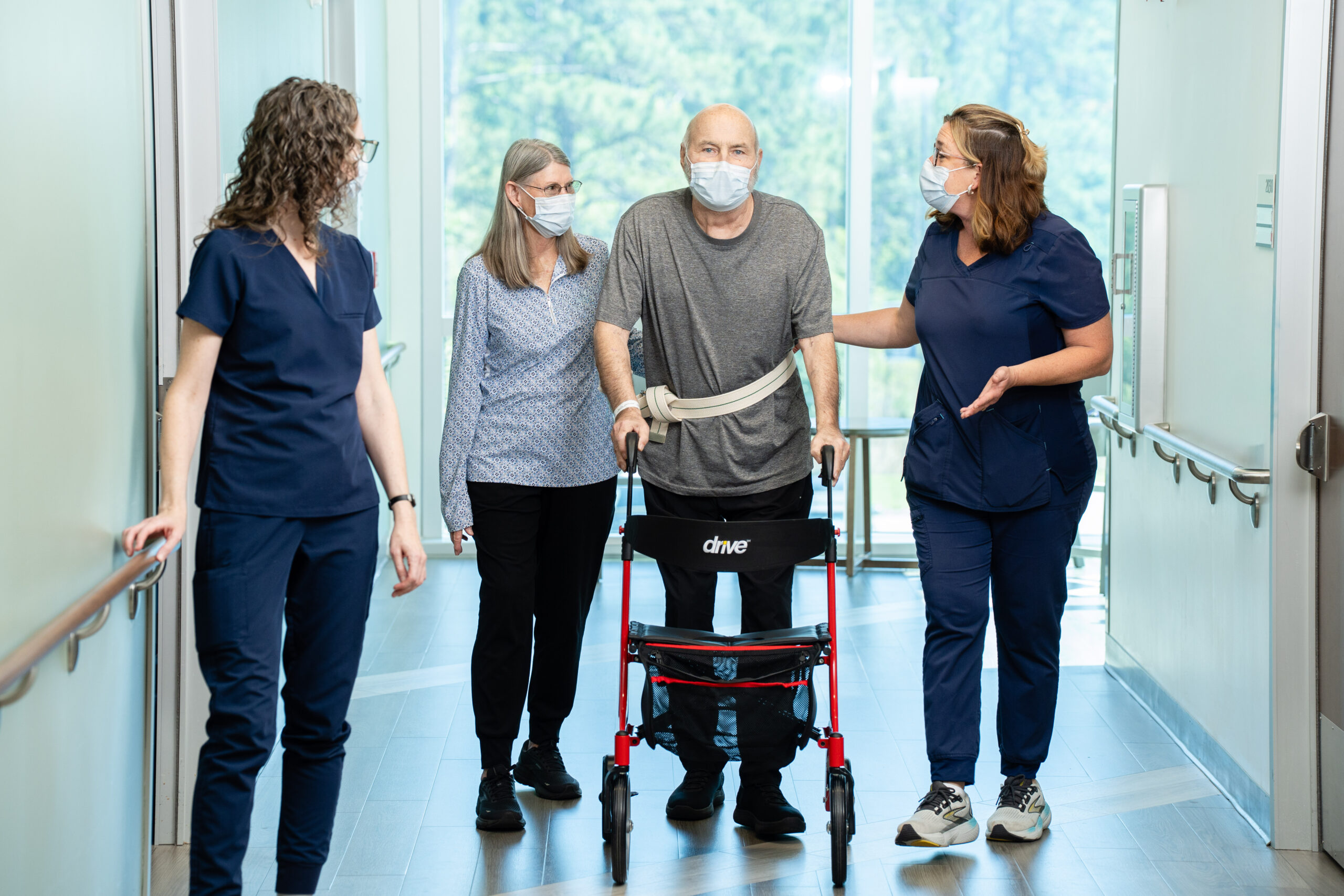
  • Advanced rehabilitation technology: Brooks uses specialized rehabilitation tools, such as supported gait systems and targeted strengthening devices. This special equipment helps rebuild your mobility while protecting areas that are still healing.
  • Caregiver support: We help patients and families feel prepared for daily care needs, follow-up appointments and a safe transition home.
  • Coordination with transplant centers: Brooks works closely with transplant teams to coordinate lab monitoring, medication adjustments and follow-up care throughout recovery.
  • Expert transplant rehabilitation team: Board-certified physical medicine and rehabilitation physicians, nurses, therapists, dietitians, psychologists and case managers work together to support you. They collaborate to care for your incision healing, nutrition, medication management and daily function.
  • Specialized care for complex liver transplant recovery: Our team is experienced in supporting recovery after major abdominal surgery. We manage fatigue, muscle loss and medication-related side effects as you heal.

FAQs about liver transplant rehabilitation

How does rehabilitation protect my surgical incision after a liver transplant?

Care teams guide movement and activity carefully to protect the abdominal incision as it heals and to avoid infection. We adjust therapy, as needed, to avoid strain while still supporting your progress and independence.

The liver plays an important role in regulating blood sugar, so most transplant patients have high sugar levels in the early post-transplant period. Some transplant medications, such as steroids and tacrolimus, also raise blood sugar levels. We manage your blood sugar to help support healing, reduce infection risk and manage energy during recovery.

Become a Patient

Find out more about becoming a patient and learn more about liver transplant rehabilitation.

Latest News and Health Resources

Education and guidance to support your recovery

Ryan posing in front of two frames

Ryan’s Story: Living and Working With a Rare Disease

Rare Disease Day is February 28 As a physical therapist, Ryan Conwell, PT, DPT, has spent her career helping other people regain movement, strength and confidence in their bodies....

Translate »
The owner of this website has made a commitment to accessibility and inclusion, please report any problems that you encounter using the contact form on this website. This site uses the WP ADA Compliance Check plugin to enhance accessibility.