She Had Less Than a 1% Chance to Live: Victoria’s Recovery From a Traumatic Brain Injury
Back to Resource Hub
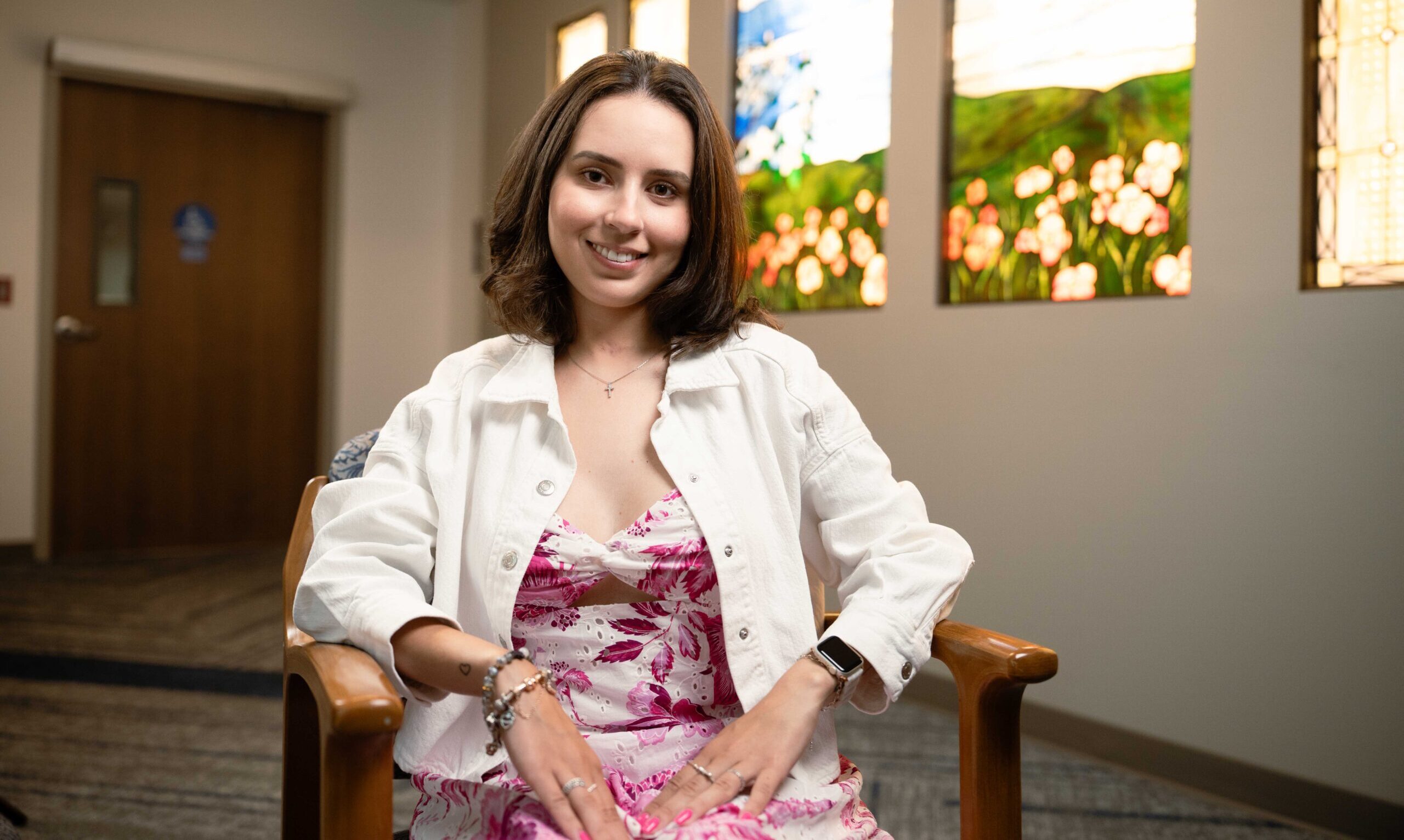
Less than a 1% chance to live. That is what doctors told the family of Victoria Pooz after an unimaginable car accident.
While driving home to South Florida from college, Victoria’s car launched 37 meters off a bridge and into a canal. She was quickly airlifted to the hospital to fight for her life. Her injuries included multiple broken bones, perforated lungs and kidneys and a severe traumatic brain injury. She also suffered cardiac arrest and was brought back to life several times.
Refusing to give up, she came to Brooks to begin the long, challenging journey of recovery. With family support and her faith leading the way, Victoria’s progress has been remarkable. Starting care at Brooks Rehabilitation Hospital – University Campus, Victoria eventually transitioned to the Brain Injury Day Treatment Program where her progress excelled.
Today, Victoria is back to living in South Florida and taking online classes. She hopes that her story will inspire others to never give up, put your faith first and remember that you are stronger than you think.
Transcript of Victoria’s recovery story
Victoria:
I’m very thankful for my team from Brooks, and it’s not just a job for them, it’s a calling. They are all very passionate and I cannot say thank you enough for them. On the day of the accident, I was feeling good and I was driving down from Tampa to South Florida to visit my family. I don’t remember what happened exactly on the accident, but doctors say that I had maybe an absent seizure or I actually had a seizure. We don’t know. The car crash happened and there was an angel behind my car and so he saw my car leaving the highway and I flew over 37 meters over the canal. I don’t remember me going on the helicopter or nothing. I don’t remember anything. I broke every bone, both knees and every bone below my knees. I broke two of my ribs and I perforated my lungs and kidneys.
And I had a traumatic brain injury at TBI and I also had the cardiac arrest. When I got to the hospital, I was dead. And one of the doctors said, “No, I’m not giving up on this girl. So thank God she manually pumped my heart and that’s how I came back alive.” And they told my parents that I had less than 1% chance of survival, that I had 0.5% chance of survival.
Dr. Persaud:
I’m Dr. Trevor Persaud. I’m the medical director of the Brain Injury Rehabilitation Program. When I first met Victoria, before even seeing her, I started reviewing her clinical case. And what was very evident to me is Victoria had a severe traumatic brain injury, but also experienced multi-trauma. So not only did she have subarachnoid hemorrhaging, she also had a stroke. She had multiple areas of her brain that she had small, tiny bleeds in. She had multiple fractures, not only in her spine, but also in her lower extremities that made her non-weight bearing to both extremities. So when I was reviewing her case, my thoughts were she’s going to definitely need a lot of therapies and a lot of skilled therapists that are going to be able to manage her restrictions.
Victoria:
When I got to Brooks, I met Dr. Persaud, my family met him and we built a connection out of this world. He’s a guardian angel to me. We thank God every day for his life, for him being an amazing doctor.
Dr. Persaud:
From a cognitive standpoint, Victoria was very impaired. I believe on the first day she scored a four out of 30 on the orientation log, which really showed us that she was experiencing post-traumatic amnesia. I was having difficulty forming memories.
Victoria:
But after the first week, I started remembering a lot of me leaving the bedroom, going to the gym, working a little bit with my body. I remember the speech therapist, he was giving me homework for every day to start remembering stuff, start writing down stuff. And I’m extremely thankful for the overall growth that I had in this hospital. The growth that I had is spectacular to think that I came here as a disoriented patient and I left here way better than when I came here. And Dr. Prasad last year, he asked me what my goals were and one of my biggest goals was to go back to college.
Dr. Persaud:
I think the big thing that really was the big game changer that we saw most recently was Victoria’s experience with the Brain Injury Day Treatment Program.
Dr. Addeo:
The Brain Injury Day Treatment Program is a comprehensive program that helps people with traumatic brain injury or other acquired brain injuries heal and recover. I think what it does, it really helps people with head, heart, and body. Helps them with how they’re doing cognitively, how they’re doing emotionally, and how they’re doing physically. The program is comprehensive in that it goes from nine in the morning till three in the afternoon, and it has an intensive amount of therapy. So it is meant to be comprehensive. It’s meant to drive neuroplasticity, and it’s meant to help the person functionally get back to their life.
Victoria:
So one of the main things that they used to teach us in the program was how to go back to normal life. And it was amazing to go to grocery store, cook meals for the class and stuff like that. It was amazing to go to therapy, physical therapy every single day, occupational therapy, speech therapy.
Dr. Addeo:
Victoria came here in the program in a wheelchair. She, by the time she did the challenge mile in March, she was actually able to do it with a rolling walker the entire mile. And then by the time she left the program, she was totally independent. She was able to ambulate independently and also was extremely excited about her ability to do so. We would hear her walking down the hall with Glee indicating that she had been able to do this without any assistance.
Victoria:
And Dr. Addeo is one of the greatest people in my life that I ever met. He’s like, wow. Dr. Addeo helped me to gain a new perspective on life because at first I was like, “Is this going to be my life?” He told me that, Victoria, you’re more than able to have a family.
Dr. Addeo:
One of her major goals was to go back to school. And so we actually were able to get her back to that goal. Right now she’s taking three classes and doing well. One of our goals was to improve her cognitive skills, her fluency, her ability to remember. And I feel like definitely she improved during the time that she was here in the program.
Victoria:
And it’s amazing to be back to college and to be a 23 year old girl again, like finishing her college right now.
Dr. Addeo:
Part of the joy I get from my job and what I do is really helping people like Victoria, people that are just so in need of the therapy and the treatments that we provide, but also are so grateful, just a great person, a good person. And she’s just so genuinely kind and benevolent.
Victoria:
So for anyone going through a similar experience that I went through, trust in God, no matter what the circumstance, like keep trusting in him. And if you have the opportunity to come to Brooks, come to Brooks and every day you are going to get better, you’re stronger than you think you are. Never give up on yourself.