Understanding Chronic Pain: A Guide for Physical Therapists and Patients
Back to Resource Hub
Pain is a complex experience. The longer it lingers, the more complex it becomes. Pain interrupts the flow of usual activities and fosters a degree of apprehension. Schedules change, activities diminish and finances may be re-routed to medical expenses.
Treating pain requires a finesse all its own. The sprained ankle that recovers in a month is no less painful or inconvenient than the sprain that takes longer to heal. However, there are specific precautions and potential fears initially that if managed well, pave the way for full recovery.
Contributing factors to pain
There are various factors that may contribute to an acute injury transforming into chronic pain. Visualizing a pie chart may help demonstrate the multiple components that contribute to such a transition.
Some pieces of the pie may be more prevalent than others; and everyone’s pie is different. The individual pieces of the pie may include physical changes of the initial injury, underlying medical health or lifestyle issues such as nutrition and sleep. Literature tells us that even mental health with stress and worry can increase the sensitivity to pain; fears can lead to avoidance of even safe activities that hinder recovery.
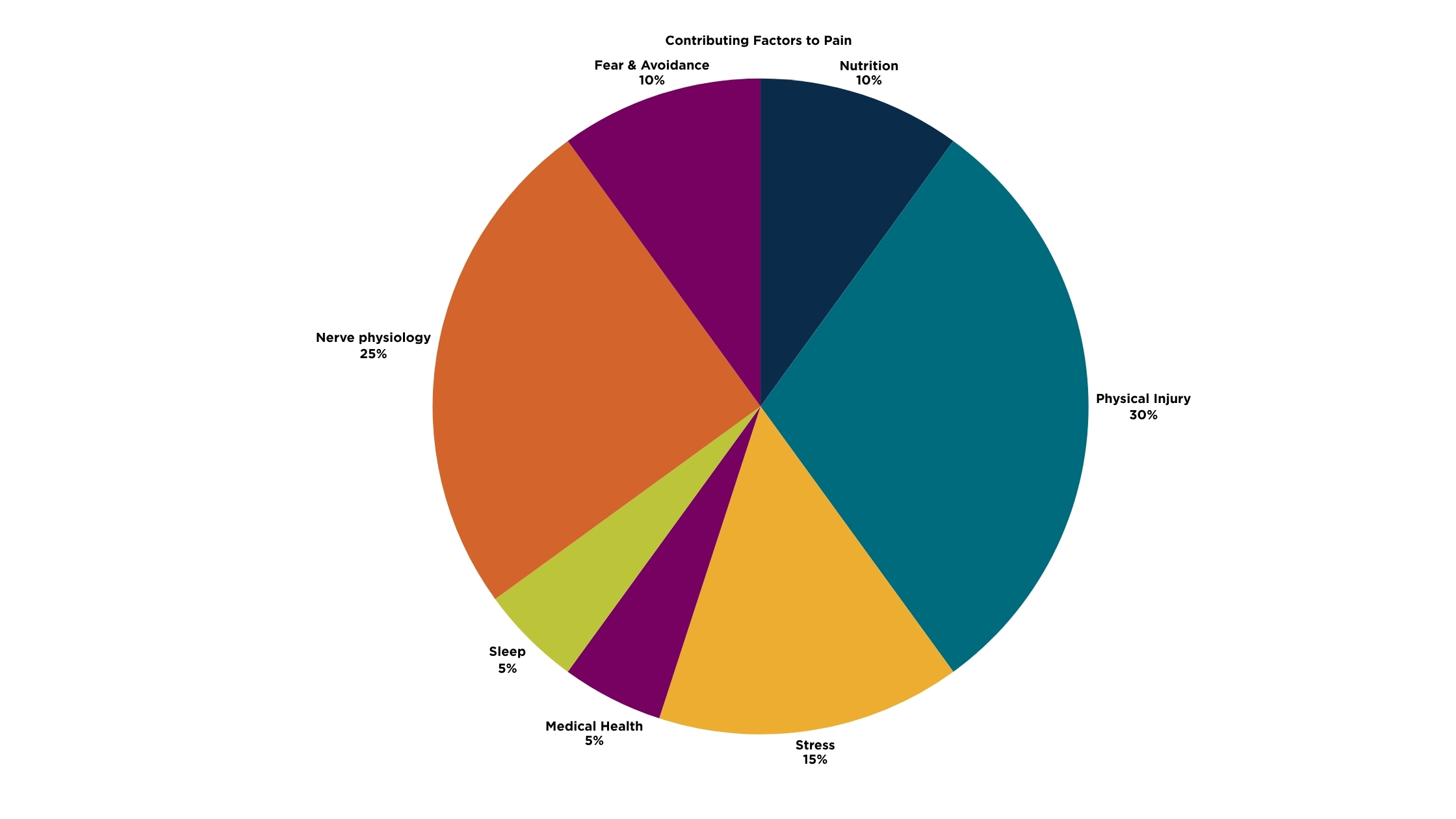
When the injury itself has resulted in physical change there is the potential for persistent pain due to tissue trauma. Consider those who have had catastrophic events leading to amputation or surgery. In some cases, the tissue changes are not repairable and a certain amount of pain may be life long.
In other situations, a seemingly minor injury can have invisible consequences on the inside. Consider the complex array of nerve signals and impulses that make up the nervous system. Neurotransmitters and nerve signals can develop a pattern of firing even after the injury has healed that results in persistent pain. In addition, these signals can become more sensitive and trigger easier in the presence of things like stress, worry, poor sleep and even poor nutrition can affect the chemical balance of the body.
Stress, sleep and nutrition issues can facilitate underlying changes in the body that also contribute to pain.
Just as pain is multifactorial, so is the most effective treatment plan. Since everyone’s pie is different a comprehensive evaluation is recommended to see just what pieces may be most affecting an individual’s pain experience. Depending on the situation this could open the door for different healthcare providers to be a part of the recovery team.
Pathways for chronic pain recovery
After an injury individuals may consult with their physician if the pain has not been resolved in a reasonable time frame. In some cases, medication may be all that is needed to ease inflammation and pain while the body heals. At other times, medication may be needed to facilitate better quality of sleep or to help with accompanying depression or anxiety.
Physical therapy may also be a great place to start. Recovering movement and strength may be needed especially if there was time spent resting during recovery. Depending on the injury there may be movements to delay to allow for healing. At other times there is the need to judiciously press into further activity or range of motion to stimulate the body’s healing and strengthening capacity.
Physical therapists specialize in strategically introducing movement while including modalities and strategies to help reduce pain.
Assessing the patient
Physical therapists can begin to assess the other pieces causing pain. There is likely at least one other factor that could be contributing to more chronic pain experiences. A therapist may discover that their patient is not sleeping well. This could be tossing and turning during the night due to pain, racing thoughts or other issues. Sometimes sleep is compromised because of pain – but a lack of sleep can also contribute to pain sensitivity. More importantly sleep is fundamental need for optimal cognitive, emotional and physical performance. Providing sleep positioning and strategies for patients to help them get a better night sleep can help ease patient’s body back into a rhythm to enhance sleep and restfulness.
Additional contributing factors to consider
Nutrition
There may also be an opportunity to include an assessment regarding nutrition. Food choices are influenced by many factors including convenience, flavor, culture and expense. At times this may lead to consuming foods that are not as healthy. Therefore, some may benefit from dietary recommendations to make more healthy food choices. There are several resources available to help with tips on introducing more healthy alternatives.
Keep in mind, others may need more specific guidance due to medical complexity or underlying pain mechanisms. The anti-inflammatory diet has been successful for some patients while others have adopted other diet patterns with positive outcomes in pain reduction.
Stress
Many people find themselves in a state of stress even without pain. Difficult situations may arise from work, school, home or even from non-stop thoughts and worries that fuel the stress that a person experiences. Pain can also be a significant factor adding to stress. A constant state of stress can negatively affect one’s health and increase pain. So, a comprehensive treatment plan for pain may also include strategies for stress management. In some cases, physical therapists can introduce ideas and tactics, planning and scheduling activities can lower the mental and physical stress of getting things done.
Fear and avoidance
At other times considering the automatic thought processes about pain can be helpful. When someone consistently thinks that their pain is horrible, that it’s not safe to move, that things will never get better, it truly begins to influence the sensitivity of their nervous system and they feel more pain.
During the process, patients may exhibit hesitancy to move due to pain itself or fear of what may happen. While pain itself is unpleasant and we naturally avoid it, there is a time and place to confront the instinct to avoid those situations to facilitate recovery. This is exactly why even acute injuries benefit from skilled therapy to guide the process of activity progression while calming fears. If those thought patterns persist it is very difficult for the patient to engage in even recommended therapeutic activities.
In some cases, stress and mental health issues need the expertise of a psychologist to introduce other alternatives.
Next steps for patients and therapists
Just as pain is multifactorial, so is the most effective treatment plan. Brooks Rehabilitation has several locations and healthcare providers including physicians and therapists to help individuals with pain and recovery. Fill out our Become a Patient request form to learn more.
For therapists interested in learning more about pain assessment and treatment, Brooks’ Institute of Higher Learning provides continuing education classes for therapy professionals.