From Immobility to Possibility: Izzy’s Determination to Reclaim Her Creative Life Following Transverse Myelitis
Back to physical health resource hub
Last Christmas was supposed to be a time of joy and celebration for Isabel “Izzy” Quezada. Instead, what began as a common case of influenza A would challenge everything she knew about herself and her future. The virus that typically causes seasonal flu took an unexpected turn, attacking her central nervous system and resulting in transverse myelitis.
Transverse myelitis is a rare neurological condition caused by inflammation of the spinal cord. It causes symptoms like weakness, numbness and loss of motor function. For Izzy, the diagnosis came with a C5 to C7 spinal cord injury classification, significantly impacting the use of her arms and requiring her to use a wheelchair for mobility.
The road to recovery begins
In mid-February, Izzy arrived at Brooks Rehabilitation Hospital – University Campus, where she would spend five transformative weeks under the care of the spinal cord injury team. What she found there was more than medical treatment. Her clinical team became like family, providing not just therapy but emotional support and hope for the future.
Her occupational therapist, Lauren Rainone, OTD, OTR/L, BCPR, witnessed Izzy’s journey from the very beginning.
“When I first met Izzy, she was experiencing lots of pain, impaired sensation and significant muscle weakness while adjusting to a whole new way of life,” Rainone recalls. “But with all of that, she was determined and willing to dive into every part of her therapy.”
Physical therapy sessions focused on helping Izzy learn to stand again using equipment like the EasyStand, despite initial challenges with blood pressure regulation that caused dizziness and nausea. She progressed to leg presses, eventually reaching 35 pounds, and worked on fundamental leg movements.
Occupational therapy took a more creative approach, incorporating activities that felt almost like games. Volleyball with inflatable balls, cornhole and object manipulation exercises helped rebuild strength and coordination. Elastic bands became tools for rebuilding muscle strength in her arms, slowly restoring function to her right hand.
“Every day, Izzy showed up ready to work, always pushing herself a little more than the day before,” Rainone remembers. For her, small victories were monumental, like learning to shower independently, using the bathroom again, mastering the manual wheelchair and even enjoying simple pleasures like Starbucks runs and tie-dyeing t-shirts.
Reclaiming identity through art and adaptation
Before her illness, Izzy was pursuing a double associates degree in studio art and digital media. She was an artist, a musician who played bass guitar, a gamer and an avid reader of horror and mystery literature. The spinal cord injury initially stripped away many of these beloved activities.
“I couldn’t play guitar or video games anymore. Holding books was a challenge and drawing was difficult at first,” she explains.
As time went on and her right-hand strength returned, Izzy discovered she could draw again on her iPad, a breakthrough moment that helped her reconnect with her artistic side. She could hold her Kindle and return to reading, diving back into the literary worlds she loved.
The rehabilitation team also introduced her to adaptive technologies. Speech-to-text devices were essential for when she might return to her studies. For gaming, creative solutions emerged. A Nintendo Wii remote could be operated with one hand, depending on the game. These weren’t perfect substitutes, but they were bridges back to joy.
“There are little loopholes, depending on what I want to do. I just needed help from Brooks to find them,” Izzy says.
A support system that goes beyond medicine
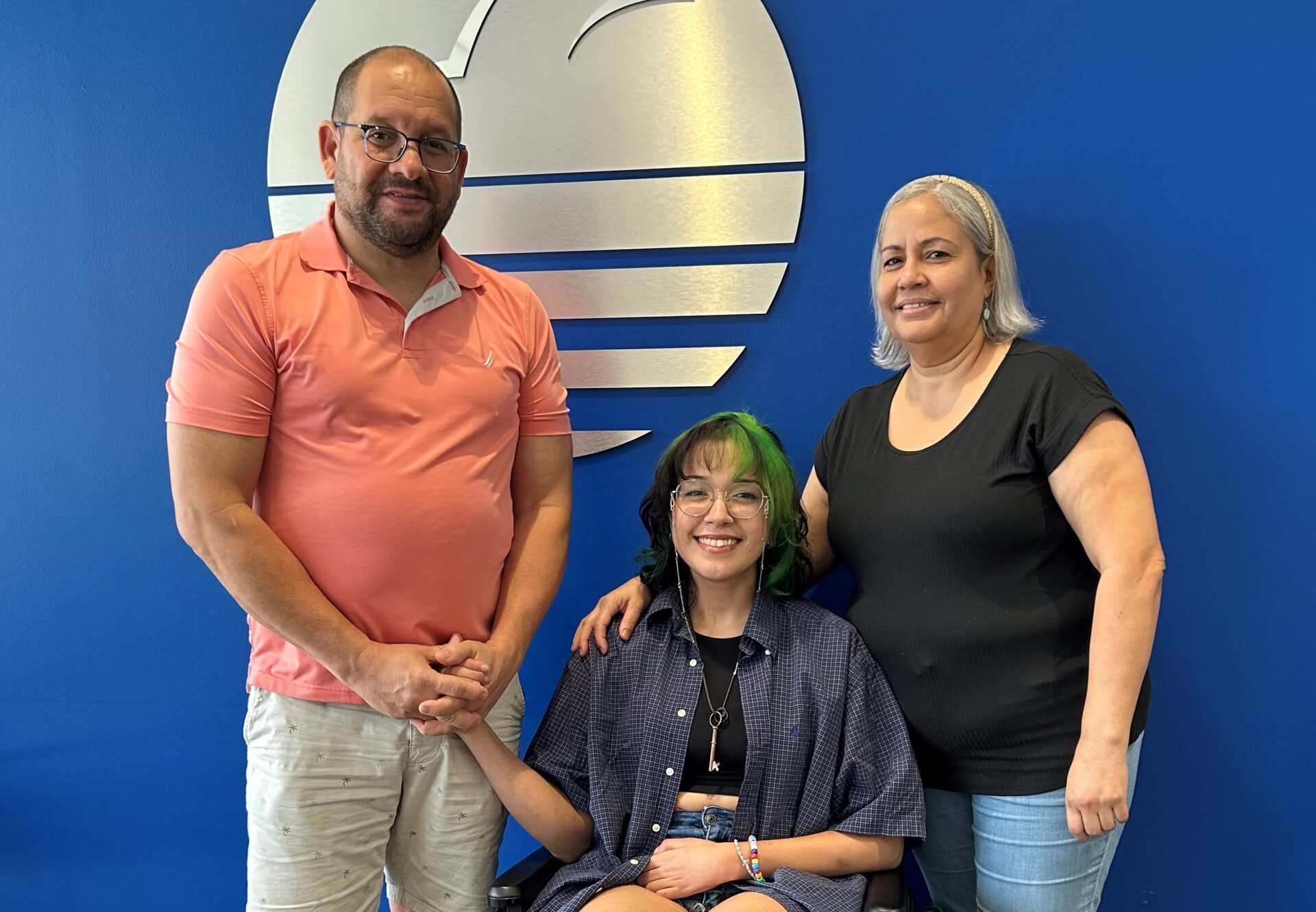
What made Brooks special wasn’t just the medical expertise — it was the human connection. Izzy’s nurse Katie would share pictures of animals from her farm during emotionally and physically difficult days, reminding her that “there’s so much life outside.” Brian Higdon, MD, Izzy’s physical medicine and rehabilitation physician, broke down language barriers to communicate with Izzy’s Spanish-speaking mother, ensuring the whole family understood Izzy’s needs and felt supported.
This holistic approach extended to preparing Izzy’s family for her return home. They received guidance on appointments, prescription medications, lifestyle adaptations and emergency contacts. When discharge day came, it felt “almost like a graduation” and everyone in the family was prepared for the next chapter of Izzy’s story.
Looking forward with determination
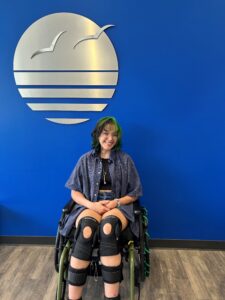
Today, Izzy continues her outpatient therapy at Brooks’ Osceola outpatient clinic in Kissimmee, Florida. “In PT, we have been working a lot on her lower extremity strength, standing balance and walking with the Arjo, an upright walker,” said Rebecca Turner, PT, DPT. “In one session, she was able to walk 96 feet total! And she is pushing 100 lbs. on the shuttle press now.”
In occupational therapy, Izzy is learning to type with one hand, teaching herself to hold a game controller again and researching accessibility devices so she can drive a car in the future.
Her approach to recovery is driven by what she calls “vengeance for what the universe gave you.” If the universe put her in a wheelchair, she’s going to fight against it and refuse to let that define her. She’s determined to find ways to live the life she wants, even if it looks different than before.
“I’m going to constantly try to be who I was even if it looks different,” she declares. “The feeling of being able to live life again is very rewarding and that’s a good enough reason to keep going.”