How Physical Rehabilitation Helped Deborah Plews Walk Again After Brain Tumor Surgery
Back to Resource Hub
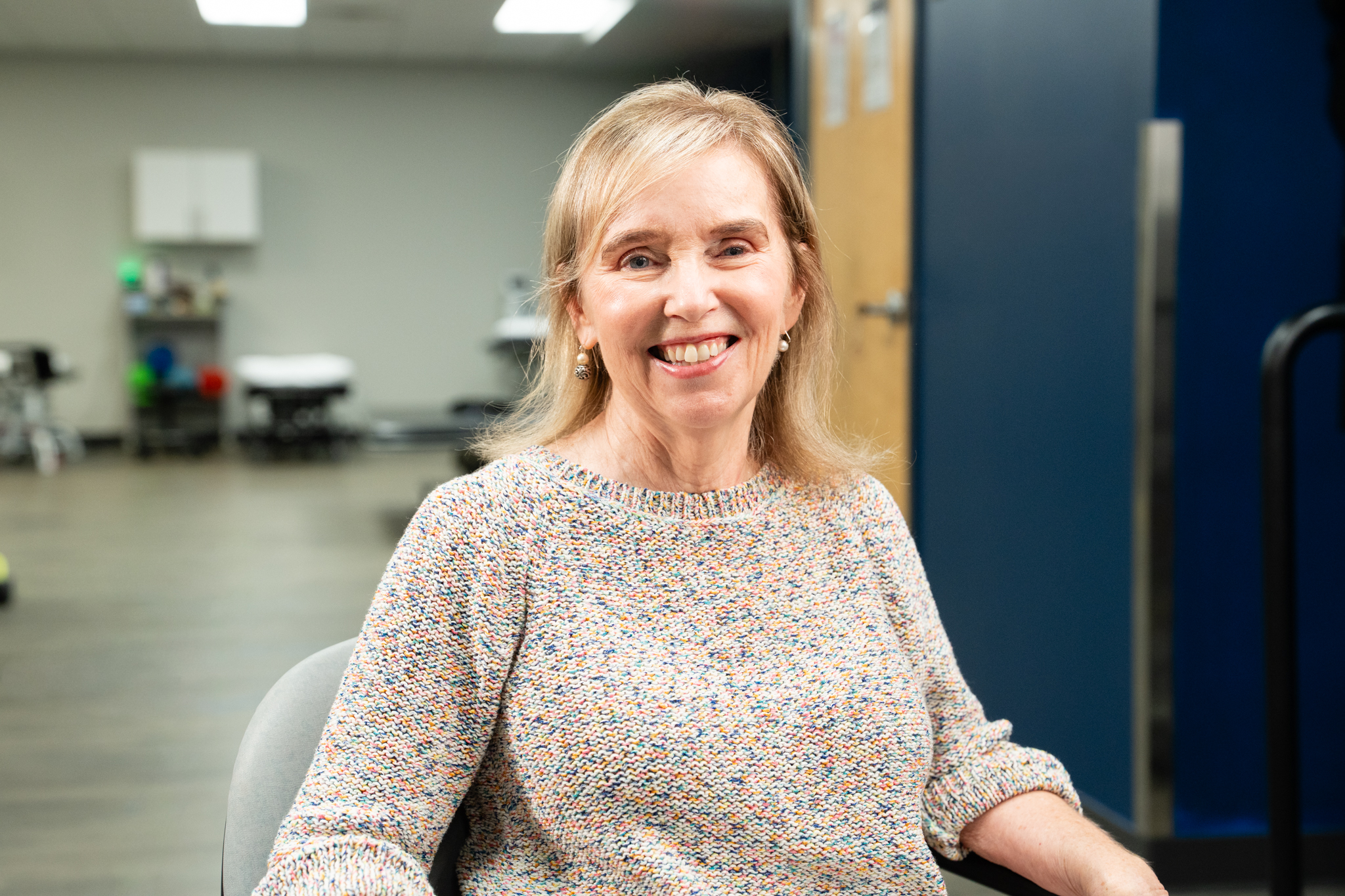
Experience the inspiring recovery story of Deborah Plews, who faced life-changing complications after brain tumor surgery. Unable to communicate or use the right side of her body, Deborah began her rehabilitation journey at Brooks, supported by a compassionate team of doctors, nurses and therapists. Through determination, intensive therapy and the encouragement of her family, Deborah rebuilt her strength, regained her speech and movement and returned to the activities she loves.
Transcript of Deborah Plew’s recovery story
Deborah Plews:
I was having severe headaches, so I decided to get to the bottom of it and do an MRI. And when your doctor calls you at home at night, you know it’s not good news. And he said I had a brain tumor.
David Plews:
So, going into surgery, we really weren’t very nervous, although it is brain surgery, so we were concerned. But Debbie earlier in the year had had aneurysm surgery, which is more risky with higher complication rate and breezed right through that. So, we figured this surgery would be go in, doctor would do his thing, and stay a couple days in the hospital for monitoring and then go home. When they were trying to wake her up from anesthesia, she was having trouble finding her words. So, it concerned us. Doctors thought it was the anesthesia. They said, give it time. She’s had trouble with anesthesia before waking up. Then when her speech didn’t improved after a number of hours, they did an MRI. Their MRI came back and said she had minor brain swelling around the surgical site.
So, they started giving her medication to help the swelling. A few days afterwards, she had a couple seizures. Those seizures caused her to have brain bleeding and a subsequent stroke. It was at that time where she lost all communication skills. The right side of her body was not working at all. She couldn’t use her arm or her leg.
Deborah Plews:
For the first two weeks, I don’t remember very much, except for my children being there and holding my hand and me looking up at my daughter, glancing up. And it was a fleeting thought, but she’d lost her dad three months ago. So, I said she can’t lose me.
David Plews:
I knew about Brooks. I knew it more as a physical therapy type place, not a intense rehab hospital. And the staff at Baptist Hospital highly recommended Brooks as a first choice.
Rachel Reeves, DO:
A brain tumor is an abnormal collection of cells in or around the brain that can be either cancerous or non-cancerous. The symptoms of a brain tumor could be new onset headaches or really severe headaches, seizures, change in function, such as your ability to walk or talk. Here at Brooks, we have the opportunity to care for patients throughout their diagnosis, treatment, and recovery with a brain tumor. So, that includes both an inpatient team, as well as outpatient services to follow you once you leave the inpatient side. This includes therapy. It can include home health. It can include other programs, such as the Brain Injury Day Treatment Program, the Brooks Clubhouse Program, the Aphasia Center, all which are available to our patients if it’s appropriate.
David Plews:
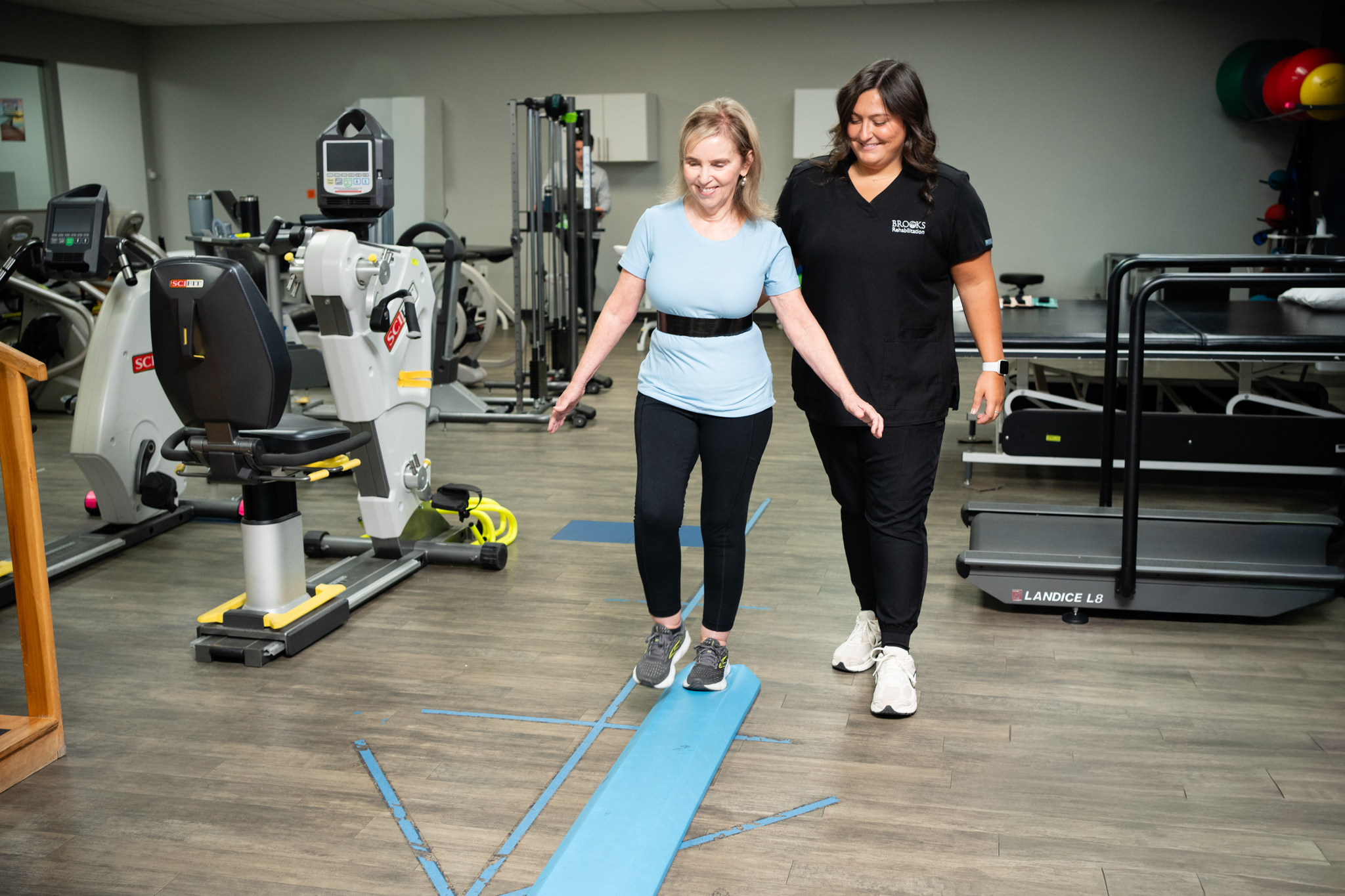
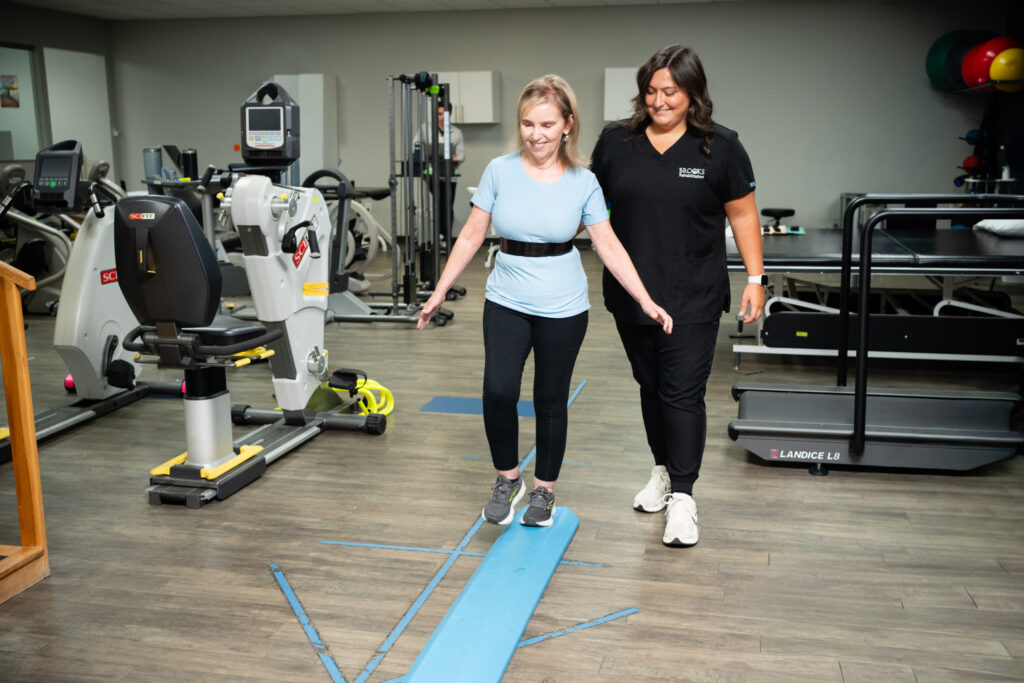
Oh, my gosh. Debbie was determined to get well. I remember her on the stationary bicycle with electrodes on her leg, because her leg wouldn’t work by herself. And her eyes closing because she was so tired, but she kept pushing through.
Deborah Plews:
At three and a half weeks in, when my foot started moving, my friend was there. And I pointed to my leg and I wiggled my toes and I moved my leg up. And she started crying. They released me from Brooks and then I immediately got started with the outpatient therapy. And it has been instrumental in my recovery.
Lauren Garcia, OTR/L, OTD, ATC:
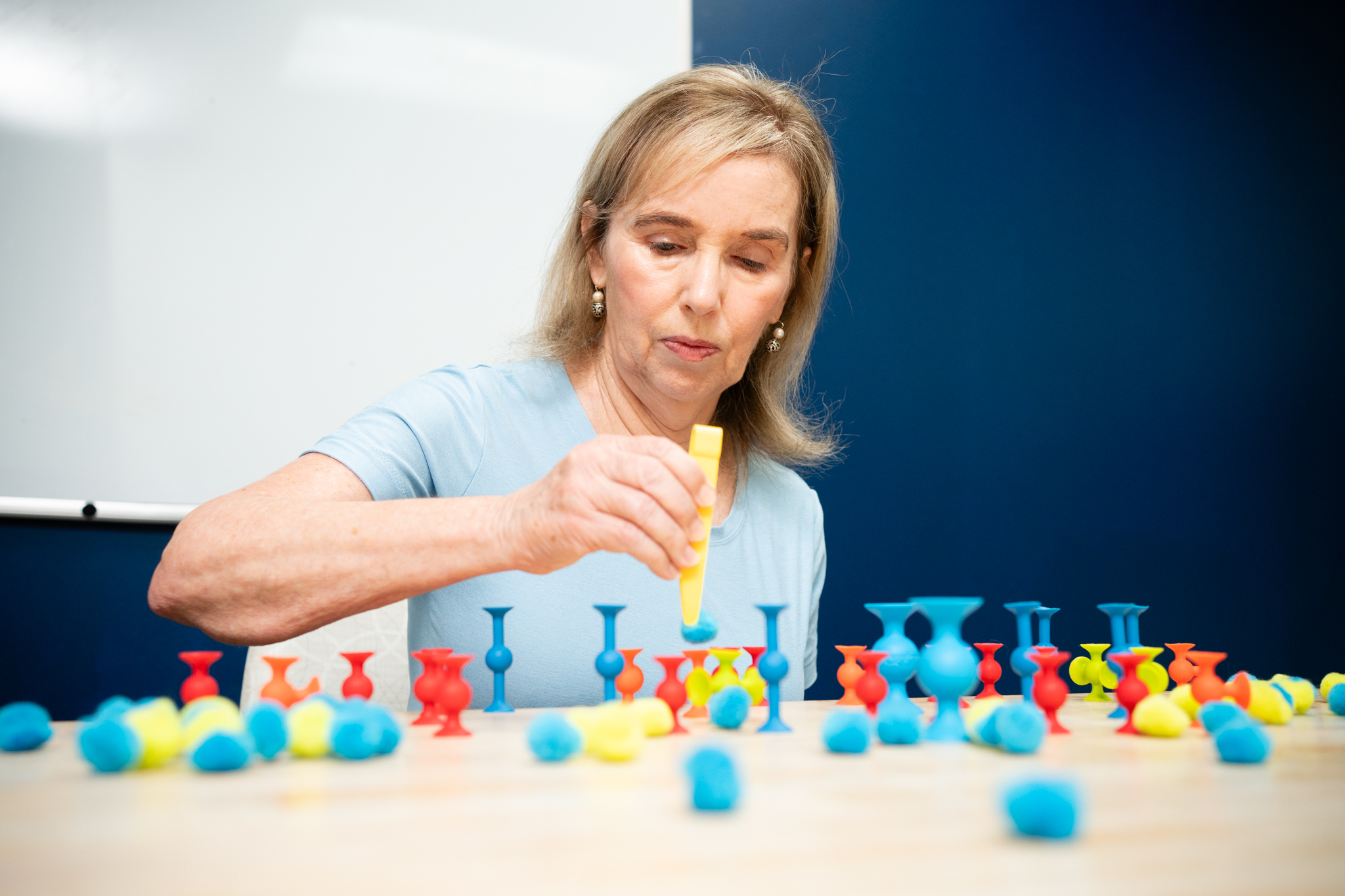
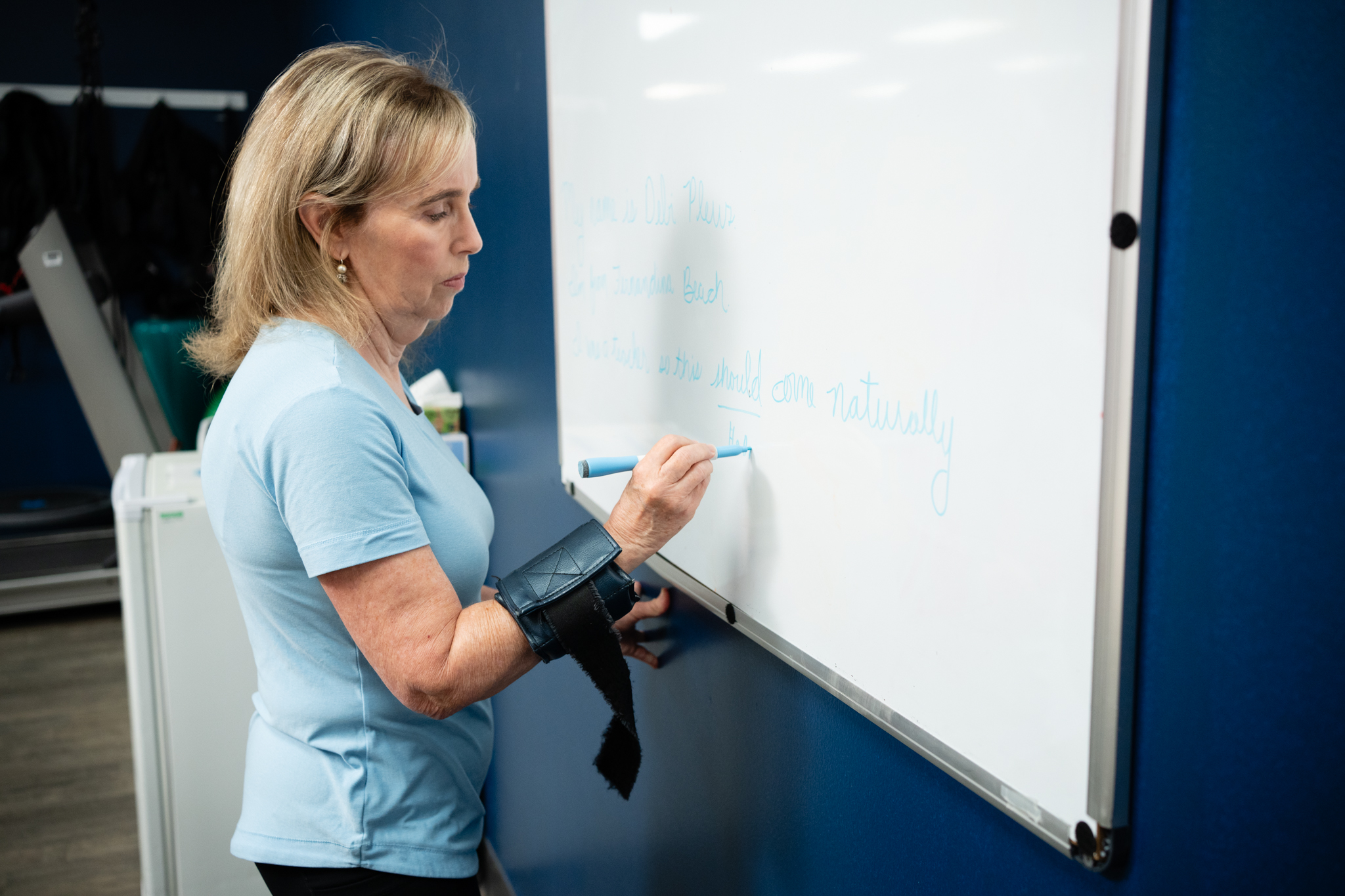
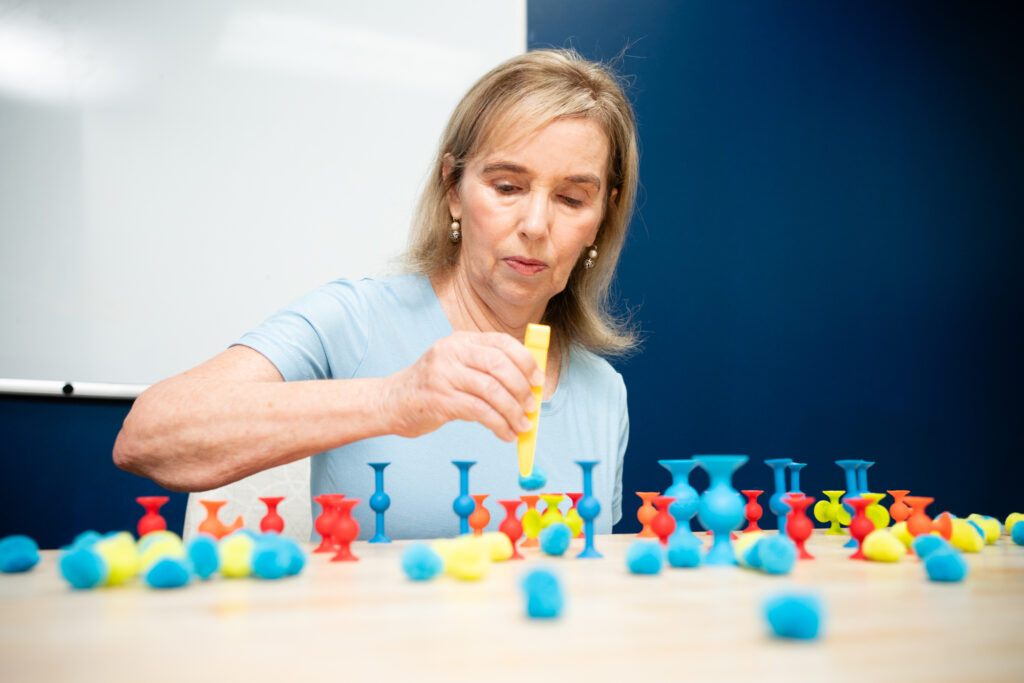
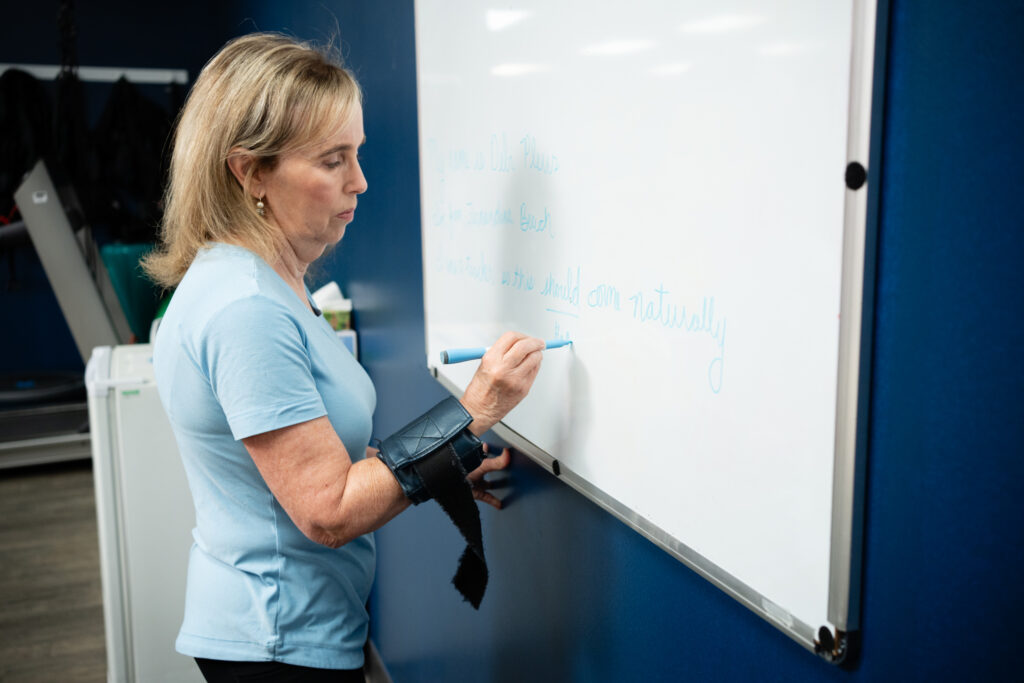
When she first came, we realized that she really had no motion of that right side of her body. And with that being her dominant side, she needs to use that in her everyday tasks. So, it was really challenging. She was getting a lot of assistance. And a brain injury is never linear, so you never know how fast they’re going to recover. So, you kind of just have to take it day by day.
David Plews:
They got her from one word, pointed a picture and speak it, to fluently talking now, reading sentences, doing tongue twisters.
Lauren Garcia, OTR/L, OTD, ATC:
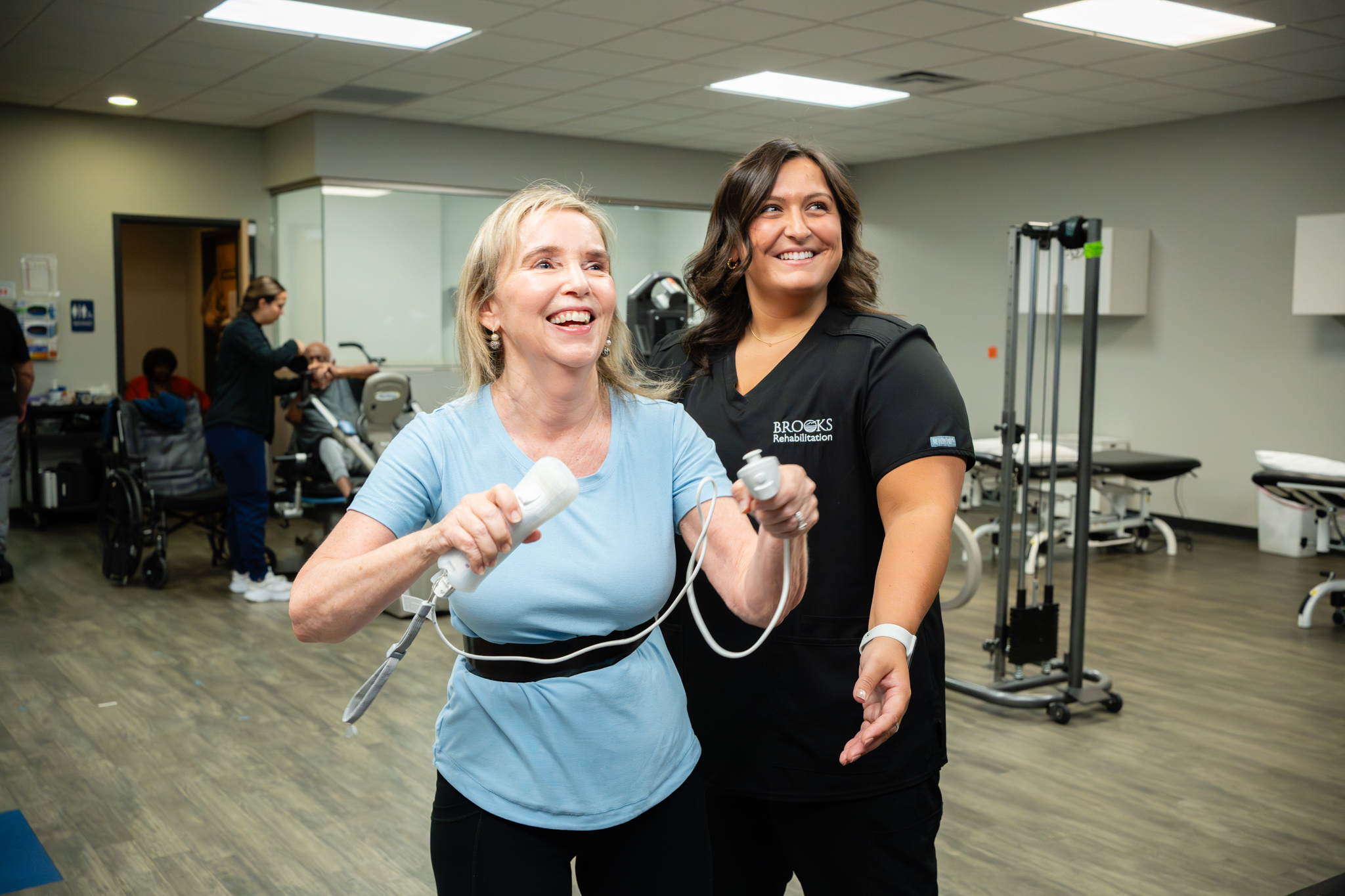
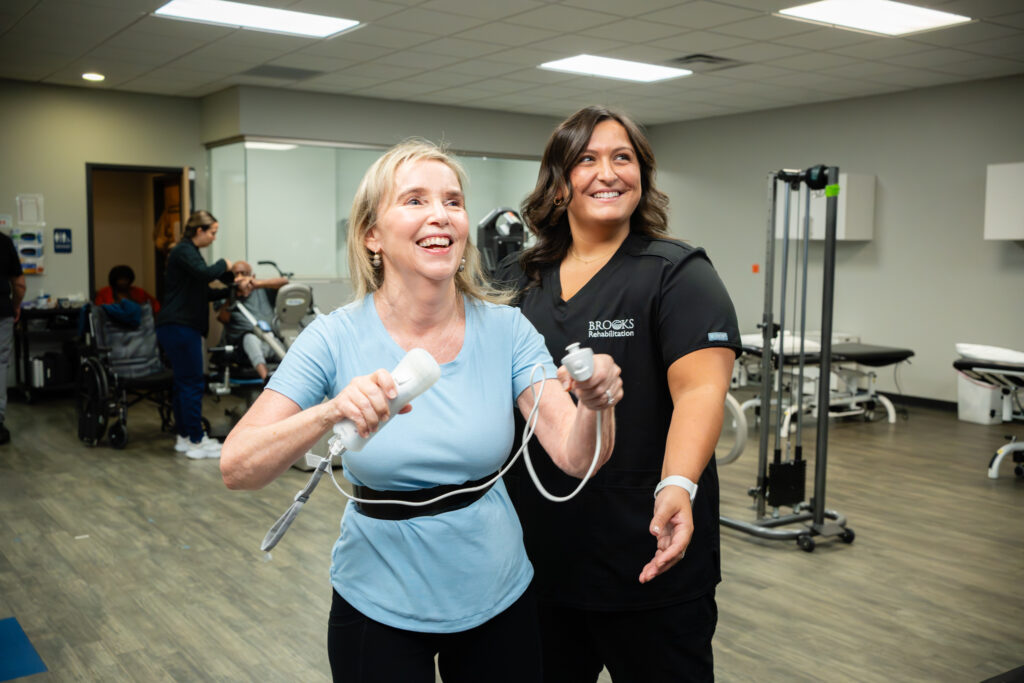
Deb is every therapist’s dream patient. Not only just her personality, but the way that she takes all the exercises we do, does them at home, and then tells you about how she’s doing them. Can I update them anymore? What more can I do?
David Plews:
It’s a miracle. Six months, almost to the day after surgery, we took a short trip to Tennessee. We’re hiking trails. She did a two-mile hike a couple times. And it’s just prayers were answered. We had no idea that she’d get to the point she is now. I imagine life with her in a wheelchair for a while or not being able to speak, or not being able to do anything using her right hand. And we got her past that. It’s just incredible where she is.
Deborah Plews:
I couldn’t have done this without the support of my friends and family and Brooks’ therapists. They’ve done phenomenal things.
David Plews:
They truly care about you. The doctors, the nurses, the CNAs, the whole team together is what got her to where she is today.
How Brooks Rehabilitation can help
Learn more about our Brain Injury Treatment Program or request information about care and treatment programs at Brooks on our Request Care page.