Glioblastoma Survivor Defies the Statistics Through Advanced Technology and Care
Back to Resource Hub
Cardiac anesthesiologist, Elizabeth Perry, MD, just finished a heart surgery and was having lunch with a student when she couldn’t form words. Not wanting to alarm those around her, she went to the bathroom and looked into the mirror. Not good. She could see that her face was drooping, as if she was having a stroke.
After about 15 minutes, her speech returned enough for her to walk over to the Emergency Room and ask for the physician on call. “I walked over to him and said, ‘I’ve got a code stroke for you.’ He asked, ‘Where?’ And I said, ‘It’s me.’”
Elizabeth was actually hoping for a stroke, because the diagnosis she received was even more alarming. Scans revealed a glioblastoma multiforme (GBM), one of the most aggressive types of brain tumors. “They expected me to live about six months. It’s been almost four years now,” she shared.
She underwent an awake craniotomy, where her surgeon was able to remove 99% of the brain tumor without affecting her function. Unfortunately, the brain swelling was so severe in the days after surgery that she lost movement on the right side of her body and experienced aphasia.
Aggressive treatment for aggressive cancer
She was transferred to Brooks Rehabilitation Hospital – University Campus under the care of Kenneth Ngo, MD. “He and I had very similar backgrounds. We both studied engineering before attending medical school. Whenever he could spend some extra time, we would chat about our shared interests. He’s a very interesting guy,” she said.
In addition to the medical care, Elizabeth received intensive therapies. After two weeks, she was discharged to continue aggressive cancer treatment. “I was able to walk with a walker, but was still very, very weak and not speaking that well.”
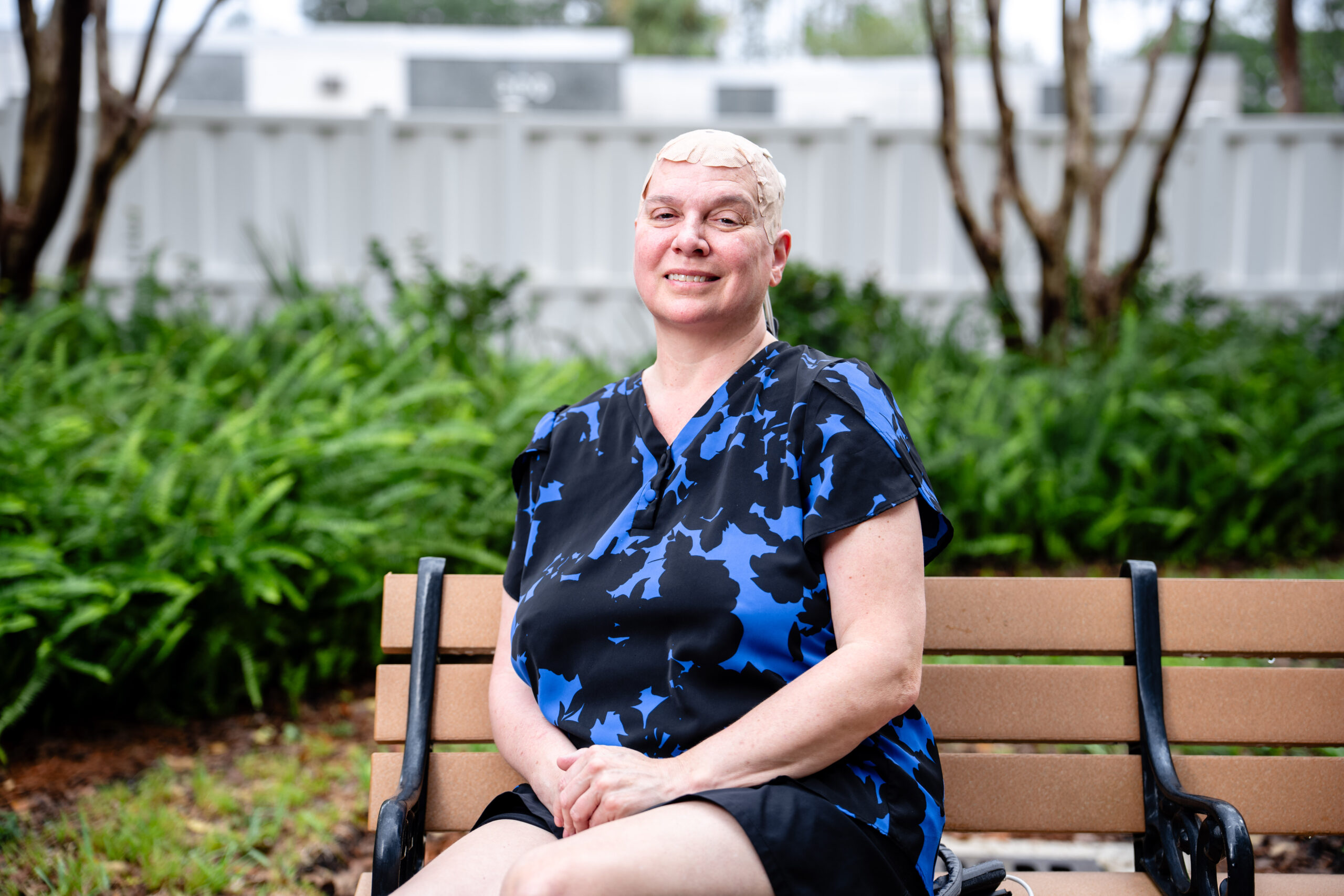
Her journey continued with radiation and chemotherapy. Ten weeks after her surgery, her neuro-oncologist, Robert Cavaliere, MD, recommended enrolling in his research study on Tumor Treating Fields (TTFields) therapy. She was given Optune Gio, a wearable, portable, FDA-approved device designed to prevent cancer cells from separating and multiplying.
“Not all doctors are recommending this treatment because they think it’s a lot of work. You have to wear the magnets over 75% of the time. Some think it is too much effort, and you should just enjoy the time you have. But I am glad that my oncologist offered it to me. It has definitely been worth it to get all the extra time. Right now, I am at four years and going strong,” said Elizabeth.
“I wouldn’t have made this much progress without Baptist, Optune and Brooks. And my faith has only gotten stronger. I have to believe that God is working toward doing something positive. That doesn’t mean I don’t have boo hoo days, but I keep getting out of bed.”
Specialized therapy goals
Elizabeth next began physical, occupational and speech therapy at Brooks Rehabilitation’s outpatient clinic in Orange Park. Traditionally, care is individualized for each patient, but in Elizabeth’s case it was even more specific.
One of her most important goals was to be able to attend and participate in her son’s medical school hooding ceremony. She needed to be able to walk across a stage, lift her hands above her head to put the heavy hood over her son’s head. Her physical and occupational therapists worked with her on those specific skills.
When the day came her daughter wheeled her onto the stage and she was able to help initiate her son into the medical field as well.
Madelynn Adams, M.S., CCC-SLP, worked with Elizabeth on her communication skills. A common challenge with brain tumors is aphasia, a loss of language but not intellect. “I still forget my words sometimes, especially when I’m tired, but Madelynn and I worked hard. She’d be proud to know I was able to remember neuro oncologist.”
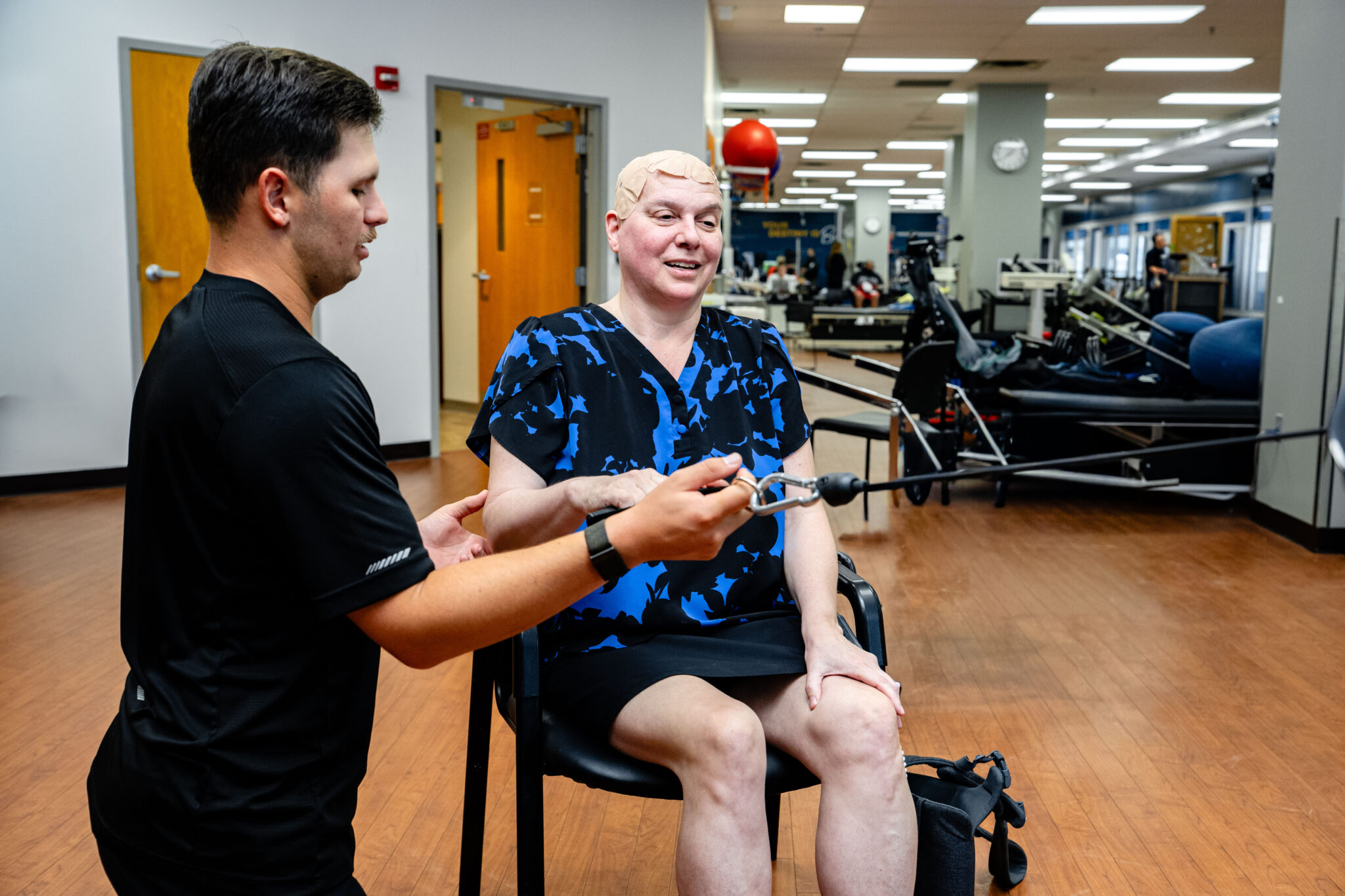
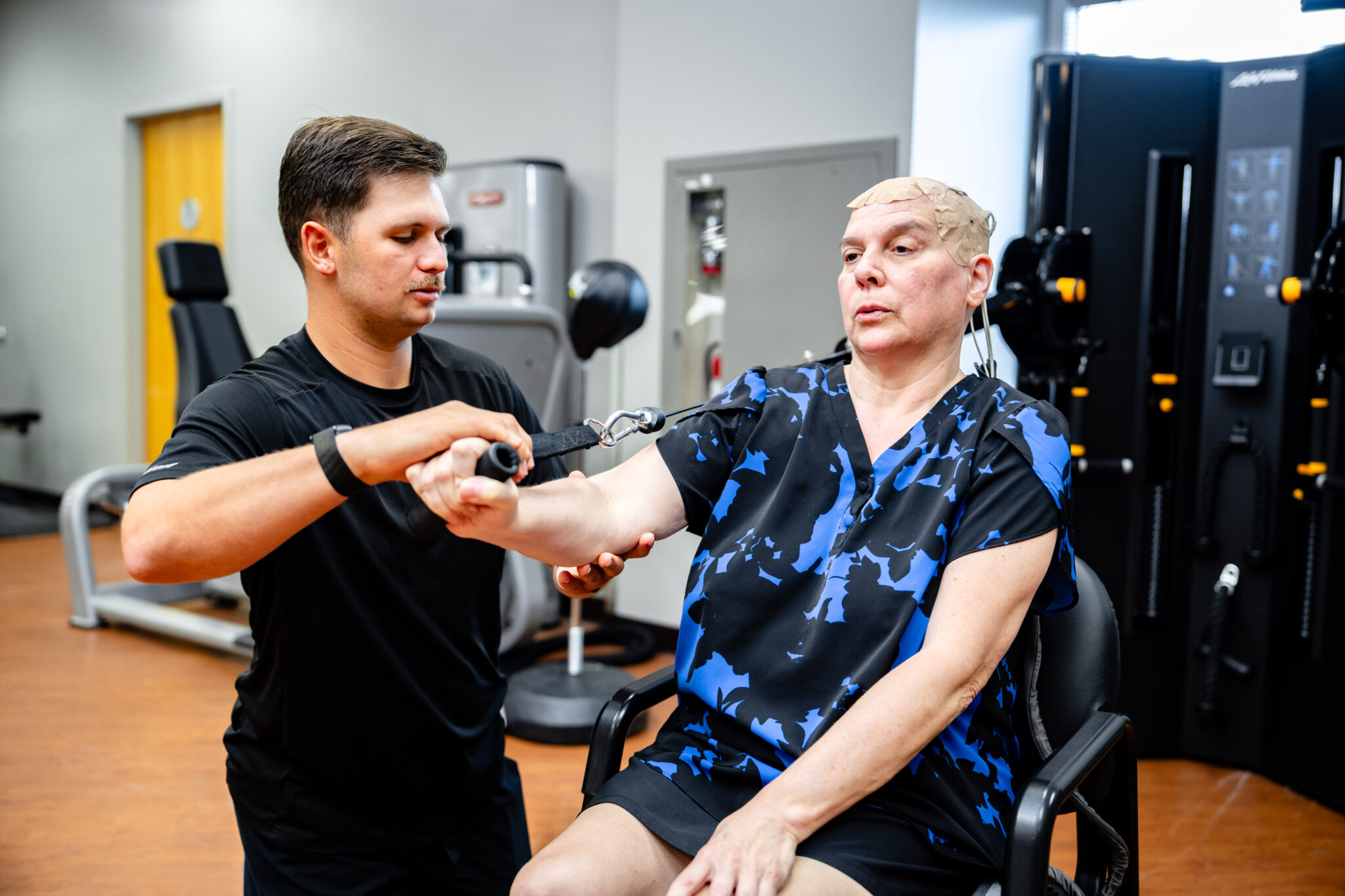
Monday and Wednesday afternoons are now spent in the Brooks Neuro Recovery Center, where Elizabeth continues to improve her strength and stamina.
Advice for others
There are understandably many emotional aspects with a diagnosis of brain cancer. One of the hardest lessons Elizabeth had to learn was how to accept help. She was used to being the caregiver but now needs to rely on others.
It was hard for her to learn how to graciously accept help without feeling like a burden.
“A diagnosis of brain cancer can be very depressing with all the statistics they give you. But everyone is different and they don’t have a crystal ball. So do as much as you possibly can in order to make your time the most productive it can be. You can’t give up. That’s the thing. Just don’t give up.”